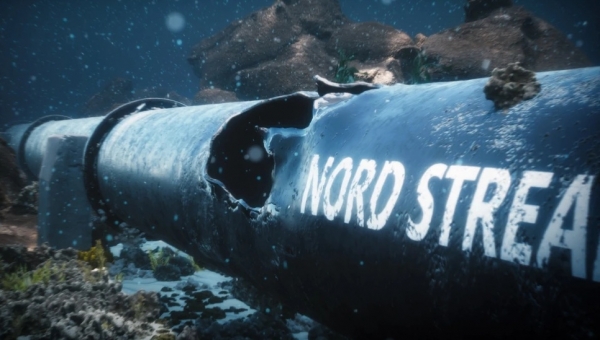
UK Supreme Court Nord Stream Decision Sends Shockwaves Through Energy Insurance Market
On October 12, 2023, the United Kingdom Supreme Court delivered a landmark ruling concerning the Nord Stream pipeline explosion, a development that has sent shockwaves through the global energy sector. The court determined that insurance companies are not liable for compensation damages resulting from the 2022 explosions, with estimated losses reaching approximately 580 million euros. This decision has far-reaching implications for how energy infrastructure risks are assessed and insured in an increasingly volatile geopolitical landscape.
The Supreme Court Ruling: Legal Precedent and Interpretation
The UK Supreme Court's ruling centered on the interpretation of insurance contracts related to the Nord Stream pipeline, a critical infrastructure project designed to transport natural gas from Russia to Germany beneath the Baltic Sea. The court's decision hinged on the application of the "war exclusion" clause found in the relevant insurance policies.
This clause, standard in many insurance contracts, specifically excludes coverage for damages arising from military conflicts, acts of war, or related activities. The Supreme Court justices concluded that the sabotage of the Nord Stream pipeline was either directly or indirectly connected to the ongoing conflict between Russia and Ukraine, thereby triggering the war exclusion provision.
The ruling represents a significant victory for the insurance industry, which faced potentially catastrophic liabilities had the decision gone the other way. More importantly, it establishes a crucial precedent for how similar incidents involving critical infrastructure in conflict zones will be treated in legal proceedings worldwide.
Understanding the War Exclusion Clause in Energy Insurance
The war exclusion clause is a fundamental component of many insurance policies, particularly those covering high-value infrastructure projects in politically sensitive regions. These clauses typically exclude coverage for:
- Direct or indirect loss caused by war, invasion, act of foreign enemy, or hostilities
- Civil war, rebellion, revolution, insurrection, or military usurpation of power
- Terrorism or acts of politically motivated violence
- Confiscation, nationalization, or expropriation by government authorities
In the context of the Nord Stream case, the court had to determine whether the pipeline sabotage constituted an event that would be covered under these exclusions. The justices ultimately found that the attack, while not directly perpetrated by a state military, was sufficiently connected to the broader geopolitical conflict between Russia and Ukraine to fall under the war exclusion provision.
This interpretation is particularly significant given the increasing frequency of hybrid warfare tactics and sabotage operations targeting critical infrastructure in the modern geopolitical landscape.
Market Implications and Industry Response
The Supreme Court's ruling has already begun to reshape the energy insurance market in several key ways:
- Financial Stability for Insurers: By avoiding a 580 million euro payout, insurance companies maintain stronger balance sheets, allowing them to continue providing coverage for other critical energy projects.
- Enhanced Risk Assessment Protocols: Insurers are likely to develop more sophisticated methodologies for assessing geopolitical risks in their underwriting processes.
- Contractual Modifications: Insurance policies may be revised to include more explicit language regarding hybrid warfare scenarios and sabotage incidents.
- Premium Adjustments: For energy projects in politically sensitive regions, insurance premiums may increase to reflect the higher perceived risk.
- Industry Consolidation: Smaller insurers unable to absorb potential mega-losses from such events may face increased pressure to merge or be acquired by larger players.
The ruling also comes at a time when the energy sector is already grappling with unprecedented challenges, including volatile commodity prices, the transition to renewable energy sources, and heightened geopolitical tensions. The insurance industry's response to these factors will significantly influence the future development of global energy infrastructure projects.
Global Energy Security and Insurance Challenges
The Nord Stream pipeline attack and subsequent legal proceedings highlight the increasingly complex relationship between energy security, geopolitical risk, and insurance coverage. As nations and corporations continue to develop and operate critical energy infrastructure in politically volatile regions, the insurance industry faces unprecedented challenges in providing adequate coverage while maintaining financial sustainability.
"This ruling represents a watershed moment for energy insurance," noted Dr. Eleanor Vance, a leading expert in energy risk management at the Global Institute of Strategic Studies. "Insurers must now develop more nuanced approaches to assessing and pricing geopolitical risks, particularly as hybrid warfare tactics become more prevalent in the 21st century."
The incident also raises questions about the adequacy of existing insurance frameworks in addressing emerging threats to critical infrastructure. As demonstrated by the Nord Stream case, traditional insurance models may be ill-equipped to handle the complexities of modern geopolitical conflicts and their implications for energy infrastructure.
Comparative Analysis of Insurance Approaches to Geopolitical Risk
| Insurance Approach | Pre-Nord Stream Ruling | Post-Nord Stream Ruling |
|---|---|---|
| War Exclusion Application | Limited to direct military action | Extended to include conflict-related sabotage |
| Premium Pricing for High-Risk Regions | Moderate increases for politically unstable areas | |
Future Outlook for Energy Insurance
Looking ahead, the energy insurance market is likely to undergo significant transformation in response to the Nord Stream ruling and the broader geopolitical landscape. Several key trends are expected to emerge:
- Specialized Insurance Products: Development of tailored insurance solutions specifically designed for energy infrastructure in high-risk geopolitical environments.
- Public-Private Partnerships: Increased collaboration between governments and insurers to provide coverage for strategically important energy projects.
- Advanced Risk Modeling: Implementation of artificial intelligence and big data analytics to more accurately assess and predict geopolitical risks.
- Enhanced Due Diligence:
- More rigorous security assessments and risk mitigation requirements for energy projects seeking insurance coverage.
The Nord Stream case has also prompted renewed discussions about the potential need for international regulatory frameworks specifically addressing insurance coverage for critical infrastructure in conflict zones. Such frameworks could provide greater clarity and consistency in how these risks are assessed and underwritten across different jurisdictions.
Conclusion: A Defining Moment for Energy Insurance
The UK Supreme Court's ruling in the Nord Stream case represents more than just a legal victory for insurance companies—it marks a pivotal moment in the evolution of energy risk management. As the global energy landscape continues to evolve amid increasing geopolitical tensions and the rise of hybrid warfare tactics, the insurance industry must adapt to provide effective coverage while maintaining financial stability.
For energy companies, investors, and policymakers, this decision underscores the critical importance of carefully considering insurance implications when developing and operating critical infrastructure in politically sensitive regions. The future of energy security will increasingly depend on the ability of the insurance industry to develop innovative solutions that address the complex risks of the 21st century.
As the energy sector continues to navigate these challenges, one thing remains clear: the Nord Stream ruling has permanently altered the relationship between geopolitical risk, energy infrastructure, and insurance coverage, setting the stage for a new era in energy risk management.
Industry Implications at a Glance
| Stakeholder Group | Key Implications |
|---|---|
| Insurance Companies | Reduced liability exposure, potential for revised policy language, increased focus on geopolitical risk assessment |
| Energy Companies | Potentially higher insurance costs, need for enhanced security measures, greater due diligence on geopolitical risks |
| Investors | |