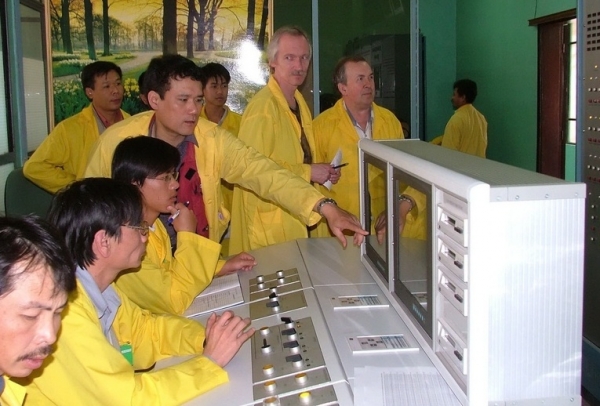
Nuclear Power Development in Vietnam: The Critical Imperative of Human Resource Preparation
In the context of global clean energy transition and national energy security, nuclear power is emerging as a vital component of Vietnam's energy strategy. However, while the construction of a nuclear power plant requires over a decade of preparation, the most critical phase involves not just design, construction, or equipment installation, but human resource development. No matter how advanced a nuclear facility may be, it cannot operate safely without a team of properly trained professionals deeply imbued with a culture of safety.
The Timeline of Nuclear Power Plant Development
According to industry experts, the process of constructing a nuclear power plant typically spans 10-15 years, encompassing several key phases: pre-feasibility studies, project development, evaluation, bidding, construction, equipment installation, and operational testing. Throughout this extensive timeline, human resource development must occur concurrently and should be prioritized as the foundation for success.
| Phase | Duration | Main Activities |
|---|---|---|
| Pre-feasibility Studies | 2-3 years | Site evaluation, market research, legal analysis |
| Project Development & Evaluation | 2-4 years | Feasibility report development, environmental impact assessment, security evaluation |
| Bidding & Supplier Selection | 1-2 years | Tender document issuance, bid evaluation, contract signing |
| Construction & Installation | 5-7 years | Infrastructure development, equipment installation, system testing |
| Operational Testing | 1-2 years | Operator training, commercial trial operation, handover |
The Critical Role of Human Resources in Safe Operation
Nuclear power represents a high-technology sector with extremely stringent requirements for safety, security, and environmental protection. According to the International Atomic Energy Agency (IAEA), a nuclear power plant requires a highly qualified, thoroughly trained operational team with practical experience. This factor is decisive for the safety of the facility and the success of the national nuclear power program.
Mr. Nguyen Van Hung, a nuclear energy specialist, shared: "Nuclear power is not just about complex technology; it demands an absolute culture of safety. Every operating personnel must understand that even a minor mistake could lead to significant consequences. Therefore, training must encompass not only technical knowledge but also safety awareness, which is of paramount importance."
Requirements for Nuclear Power Expert Teams
To operate a modern nuclear power plant, a multidisciplinary team is required with the following key professional groups:
- Plant Operation: Reactor control engineers, system monitoring engineers, nuclear safety engineers
- Maintenance & Repair: Mechatronics engineers, nuclear materials engineers, non-destructive testing engineers
- Safety & Radiation: Radiation safety engineers, environmental monitoring specialists, nuclear waste management experts
- Management & Oversight: Project management specialists, nuclear regulatory compliance experts
Each position requires at least a bachelor's degree, with many positions requiring master's or doctoral degrees in relevant specialized fields. Particularly, the plant operating team must be licensed by the national nuclear regulatory authority after passing rigorous examinations.
Challenges in Nuclear Human Resource Training in Vietnam
Vietnam faces numerous challenges in developing human resources for nuclear power:
- The nuclear human resource training system is still in its infancy, lacking instructors with practical experience
- Training programs are not yet aligned with international standards
- Lack of practical training facilities with nuclear plant models
- Limited policies for attracting and retaining nuclear talent
- Ineffective cooperation mechanisms with countries experienced in nuclear power development
According to a report by the Ministry of Science and Technology, Vietnam currently has only about 200 specialists with comprehensive nuclear training, while a single nuclear power plant requires at least 300-400 highly qualified personnel.
Solutions and Recommendations
To address the human resource challenge for nuclear power, experts have proposed several solutions:
| Solution | Detailed Description | Implementation Timeline |
|---|---|---|
| Develop a Long-term Training Strategy | Create a training roadmap from present to plant operation, focusing on training core personnel first | 2023-2025 |
| Invest in Training Facilities | Establish a nuclear plant simulation training center, equipped with modern practice facilities | 2024-2027 |
| International Cooperation | Sign training cooperation agreements with experienced nuclear countries like Russia, South Korea, France | 2023-2025 |
| Talent Attraction Policies | Develop special incentive policies for nuclear specialists, create clear career advancement paths | 2023-2024 |
| Develop Collaborative Training Programs | Combine on-site training with overseas education, especially for the core operational team | 2023-2030 |
Dr. Tran Van Tung, Director General of the Vietnam Atomic Energy Institute, emphasized: "We need to start today. Nuclear human resource training is a long process that cannot be rushed. If we don't prepare human resources now, no matter how modern the plant is, we cannot operate it safely and efficiently."
Conclusion
Developing nuclear power is a significant decision for Vietnam, impacting not only technology but also human resources. The human resource challenge must be addressed as a top priority, moving ahead of other development activities. Only with a team of qualified professionals, thoroughly trained and deeply committed to a culture of safety, can nuclear power truly become a clean, reliable, and safe energy source for Vietnam's sustainable development.
Investing in nuclear human resources is an investment in Vietnam's energy future, laying a solid foundation for sustainable development and international integration in the high-tech energy sector.
#nuclearpower #humanresources #cleanenergy #nuclearsafety #sustainabledevelopment