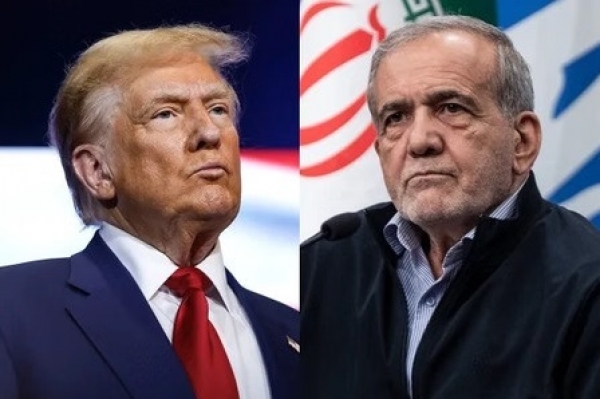
M Tightens Sanctions on Iran Amid Escalating Middle East Tensions
PetroTimes - The geopolitical landscape in the Middle East continues to deteriorate as the United States has announced a significant tightening of sanctions against Iran, escalating nuclear tensions and threatening regional security in one of the world's most volatile regions.
Escalating Tensions in the Middle East
On July 16, the U.S. Department of Treasury announced new measures targeting Iran's shipping and financial networks, accusing the Middle Eastern nation of continuing its ballistic missile program and destabilizing activities in the region. This development comes amid already heightened tensions following Iran's announcement that it had exceeded uranium enrichment limits set by the 2015 nuclear agreement, which the United States unilaterally withdrew from in 2018 under President Donald Trump.
The timing of these sanctions is particularly significant, occurring just weeks after a series of incidents in the Persian Gulf, including attacks on oil tankers and the downing of a U.S. drone by Iranian forces. These events have created a precarious security environment that has drawn international concern.
Details of New Sanctions
According to the Treasury Department announcement, the new sanctions specifically target:
- Eight vessels and one shipping company accused of transporting Iranian petroleum products
- Financial networks supporting the Islamic Revolutionary Guard Corps (IRGC)
- intermediary companies facilitating Iran's access to international financial systems
- Individuals and entities involved in Iran's petrochemical industry
"We will not hesitate to use our tools to isolate and pressure the Iranian regime until it changes its dangerous behavior," stated U.S. Treasury Secretary Steven Mnuchin in a press release accompanying the sanctions announcement.
The sanctions effectively block any assets of the targeted entities within U.S. jurisdiction and prohibit Americans from engaging in transactions with them. Additionally, foreign financial institutions that conduct significant transactions with these targets risk being cut off from the U.S. financial system.
Targeted Entities and Rationale
The Treasury Department specifically identified the following key targets:
- The Islamic Republic of Iran Shipping Lines (IRISL) and its subsidiary, E-Sail Shipping Company
- A network of front companies used by IRISL to obscure ownership of vessels
- Three petrochemical companies generating hundreds of millions of dollars in revenue for the IRGC
- A network of brokers facilitating oil sales to multiple countries
These entities were selected based on intelligence indicating their role in circumventing existing sanctions and supporting Iran's military programs.
Iran's Response
Tehran has vehemently condemned the new sanctions, describing them as "economic piracy" and a violation of international law.
"The United States believes it can impose its will on the world through unilateral sanctions, but they are mistaken," stated a spokesperson for Iran's Ministry of Foreign Affairs in an official statement.
Iranian officials also warned that the sanctions would not prevent them from advancing their nuclear program and missile capabilities, which they maintain are for peaceful purposes only. In response, Iran announced it would further accelerate its uranium enrichment activities, moving beyond the 3.67% enrichment limit set by the 2015 Joint Comprehensive Plan of Action (JCPOA).
In a press conference held in Tehran, Iranian President Hassan Rouhani stated: "These sanctions will only strengthen our resolve to achieve technological independence and protect our national interests."
Impact on Regional Security and Energy Markets
The new U.S. sanctions are likely to exacerbate instability in the Middle East, a region that has already witnessed numerous attacks on oil tankers and energy infrastructure in recent months. These developments threaten vital shipping lanes through which a significant portion of global oil exports transit.
Regarding energy markets, experts predict short-term price increases due to concerns about supply from the region. The following table compares oil prices during the past week:
| Oil Type | Price (USD/barrel) | Weekly Change | Year-to-Date Change |
|---|---|---|---|
| Brent Crude | 75.20 | +1.5% | +35.2% |
| WTI | 72.15 | +1.2% | +42.8% |
| Iranian Export Blend | 65.80 | +2.8% | +28.5% |
International energy companies are facing significant challenges in securing operations in the region. Many have begun reassessing their investment plans in the Middle East, with some temporarily suspending exploration activities in disputed waters.
"The uncertainty created by these sanctions makes long-term planning extremely difficult," stated a senior executive at a major European energy company who requested anonymity. "We must balance our commercial interests with the need to ensure the safety of our personnel and assets."
International Reactions
The United Nations and European nations have called for restraint, expressing concern about the potential for escalation in Middle East tensions.
"We urge all parties to exercise maximum restraint and return to the negotiating table," stated a representative from the United Kingdom during a UN Security Council meeting.
The European Union, which has sought to preserve the nuclear agreement through its own mechanism for trade with Iran (INSTEX), expressed disappointment at the U.S. actions but stopped short of condemning them outright.
In contrast, several Arab nations such as Saudi Arabia and the United Arab Emirates have expressed support for the U.S. sanctions, accusing Iran of destabilizing activities throughout the region.
"Iran's continued support for proxy groups and its ballistic missile program pose a direct threat to our security," stated a spokesperson for the Saudi Foreign Ministry.
Future Prospects
International experts fear that tensions between the U.S. and Iran could lead to a large-scale military conflict, particularly after the U.S. deployed additional naval vessels and bomber aircraft to the Gulf region.
The following table compares military capabilities in the Middle East region:
| Country | Naval Vessels | Combat Aircraft | Ground Forces | Nuclear Capabilities |
|---|---|---|---|---|
| United States | 45 | 180 | 25,000 | Yes |
| Iran | 39 | 350 | 513,000 | No (undeclared) |
| Saudi Arabia | 17 | 270 | 250,000 | No |
| Israel | 5 | 240 | 170,000 | Yes (undeclared) |
Many political analysts argue that the only viable solution to this crisis is a return to multilateral negotiations, although there are currently no indications that either side is willing to return to the diplomatic table.
"The risk of miscalculation is extremely high in this environment," stated a former U.S. State Department official specializing in Middle Eastern affairs. "Both sides appear to be operating under the assumption that the other will back down, which is a dangerous assumption in this type of standoff."
Humanitarian and Economic Consequences
Beyond the immediate security concerns, the sanctions are expected to have severe humanitarian consequences for ordinary Iranians. Previous sanctions have led to shortages of essential medicines and medical supplies, with reports of increased mortality rates for treatable conditions.
The economic impact on Iran has been significant, with the national currency losing over 60% of its value against the dollar since 2018. Inflation has soared to over 40%, and unemployment, particularly among young people, remains at crisis levels.
Meanwhile, neighboring countries are bracing for potential refugee flows should the situation deteriorate further. Jordan, Iraq, and Turkey have all expressed concern about their capacity to handle large numbers of refugees should armed conflict break out.
Conclusion
The new U.S. sanctions against Iran have significantly escalated tensions in the Middle East, presenting substantial challenges for regional security and global energy markets. In this context, the international community is seeking diplomatic solutions to prevent a potential military conflict that could have severe consequences worldwide.
The situation remains fluid, with multiple factors influencing the trajectory of events. Energy markets are particularly sensitive to developments in the region, and any escalation could lead to significant price volatility that would impact economies globally.
PetroTimes will continue to provide the latest updates from this Middle East hotspot as the situation evolves.
Keywords: Middle East, United States, Iran, Sanctions, Energy, International Security