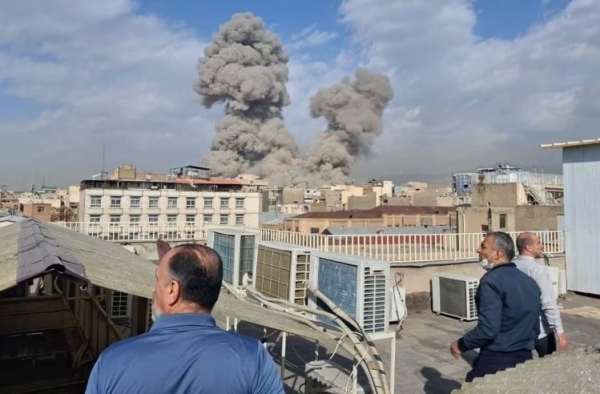
Middle East Escalation: US Intensifies Attacks on Iran in July 17th Developments
Geopolitical Tensions Rise in Oil-Rich Region as Military Actions Increase
In a significant escalation of regional tensions, the United States conducted a series of targeted attacks against Iranian interests across the Middle East on July 17th, dramatically increasing the risk of direct conflict between the two major powers. This development represents one of the most critical geopolitical flashpoints on the current global landscape, with potentially far-reaching consequences for international security and energy markets.
Background to Escalating Tensions
The relationship between the United States and Iran has been strained for decades, with tensions particularly intensifying since the US unilaterally withdrew from the Iran Nuclear Deal (JCPOA) in 2018 and reinstated sweeping economic sanctions. However, recent developments indicate that the situation has entered a more dangerous phase with direct military confrontation becoming increasingly likely.
| Timeline of Key Events | Description |
|---|---|
| 2018 | US withdraws from Iran Nuclear Deal, reimposes sanctions |
| 2019-2020 | Series of attacks on oil tankers in Gulf; Iranian general Soleimani killed in US strike |
| 2021-2023 | Negotiations for revived nuclear deal stall; Iran accelerates nuclear program |
| 2024 | Increased attacks on US forces in region; diplomatic relations deteriorate further |
| July 17, 2024 | US launches direct attacks on Iranian military targets |
The current crisis builds upon several months of increasing hostilities, including attacks on US military bases, drone incursions, and escalating rhetoric from both Washington and Tehran.
Details of the US Military Operations
According to security officials from the United States, the attacks were conducted using a combination of unmanned aerial vehicles (drones) and short-range missiles targeting military infrastructure near the Iran-Iraq border. The specific objectives were reportedly facilities associated with the Islamic Revolutionary Guard Corps (IRGC) and Iranian-backed militia groups.
A senior US Department of Defense official, speaking on condition of anonymity, stated: "These actions were taken in self-defense and to prevent immediate threats to American forces and regional partners. The intelligence clearly indicated imminent attacks being planned by these Iranian-affiliated elements against US interests in the region."
The operations reportedly focused on:
- Command and control centers of the IRGC's Quds Force
- Weapons storage facilities supplying proxy groups
- Drone manufacturing sites
- Missile launch positions
International Reactions
The international community has responded with widespread concern to the escalation:
| Entity | Position | Key Statements |
|---|---|---|
| United Nations | Calls for restraint | "All parties must exercise maximum restraint to avoid further escalation that could destabilize the entire region." |
| European Union | Deep concern | "Strongly urges de-escalation and return to diplomatic channels." |
| Russia & China | Criticism of US | "Violation of international law and sovereignty of nations." |
| Gulf States | Caution | "Express concern over regional stability and urge peaceful resolution." |
| Israel | Support for US actions | "Recognizes the right to defend against Iranian aggression." |
Impact on Energy Markets
Given the Middle East's critical role in global oil production, the instability has immediately affected energy markets:
| Market Indicator | Pre-Conflict Level | Post-Conflict Level | Change (%) |
|---|---|---|---|
| Brent Crude (USD/barrel) | 78.50 | 82.30 | +4.8% |
| WTI Crude (USD/barrel) | 74.20 | 78.90 | +6.3% |
| Natural Gas (USD/MMBtu) | 2.85 | 3.12 | +9.5% |
| VIX Fear Index | 18.2 | 23.5 | +29.1% |
| Gold (USD/oz) | 2,315 | 2,385 | +3.0% |
Energy analysts from PetroTimes suggest that continued escalation could push crude prices up an additional $5-10 per barrel in the short term, particularly if the conflict expands to major oil-producing areas or disrupts shipping through strategic chokepoints like the Strait of Hormuz.
Expert Analysis
Dr. Michael Reynolds, Professor of International Relations at Georgetown University, commented: "The US actions appear to be calibrated to send a strong message without triggering full-scale war. However, the risk of miscalculation is significant. Iran's response doctrine typically involves asymmetric attacks on US interests and allies, creating a potential cycle of escalation."
On the economic front, Dr. Sarah Johnson, Senior Energy Economist at the Global Institute, noted: "Energy markets are already operating with thin spare capacity. Any sustained disruption from the Middle East could quickly translate into higher global inflation and potentially trigger central bank responses, complicating monetary policy decisions worldwide."
Former Ambassador to the region, James Mitchell, added: "The timing of these operations suggests the Biden administration is attempting to establish red lines for Iranian behavior while avoiding the political consequences of another major Middle East war. However, the region's volatility makes such calculations extremely risky."
Future Scenarios
Several potential trajectories for the situation have been identified by analysts:
| Scenario | Probability | Potential Outcomes |
|---|---|---|
| Limited Exchange | High (60%) | Short-term skirmishes with minimal escalation; markets stabilize after initial shock |
| Protracted Conflict | Medium (30%) | Sustained hostilities; sustained high energy prices; regional instability |
| Full-Scale War | Low (10%) | Major regional conflict; global energy crisis; potential wider international involvement |
Strategic Implications
The current crisis has significant implications for global security and economic stability:
- Energy Security: Major oil consumers in Asia and Europe face potential supply disruptions and price volatility
- Global Trade: Shipping routes through the Persian Gulf and Red Sea may be disrupted
- Diplomatic Relations: Already strained relations between major powers could deteriorate further
- Military Alliances: NATO and other security alliances may be tested
- Non-Proliferation: Iran's nuclear program may accelerate, potentially triggering regional arms races
Conclusion
The escalation of military actions between the United States and Iran on July 17th has created one of the most dangerous geopolitical flashpoints in recent memory. This development not only threatens regional stability but also poses significant risks to the global economy, particularly through potential disruptions to energy markets.
The international community must intensify diplomatic efforts to de-escalate tensions and encourage dialogue between the conflicting parties. In the current climate of heightened risk, careful monitoring of developments and contingency planning are essential for nations worldwide, particularly those heavily dependent on Middle Eastern energy resources.
The coming days and weeks will be critical in determining whether this episode represents a temporary spike in tensions or the beginning of a more prolonged and destabilizing conflict. The stakes are exceptionally high, with implications reaching far beyond the immediate region to affect global security, economic stability, and international relations for years to come.