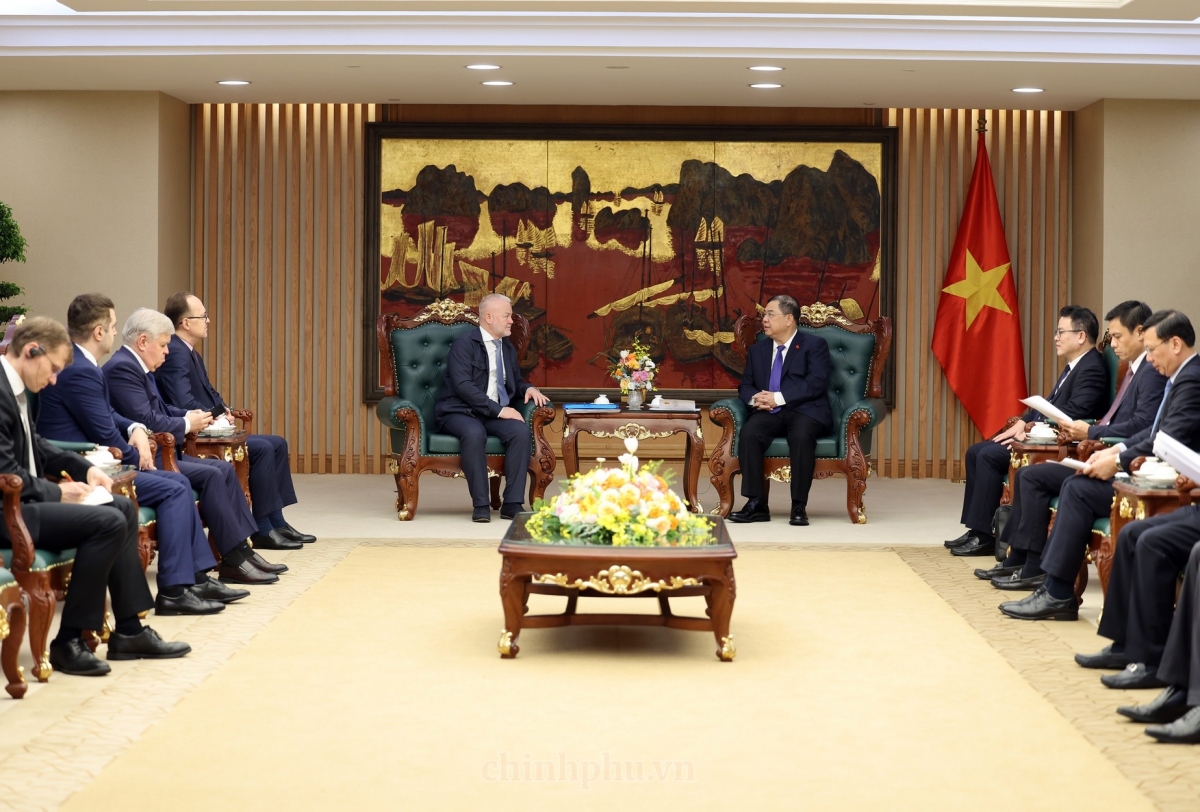
Deputy Prime Minister Receives Russian Energy Giant RusHydro to Discuss High-Tech Hydropower Cooperation
On the afternoon of July 16, 2026, at the Government headquarters, Member of the Politburo and Deputy Prime Minister Pham Gia Tuc held a courtesy meeting with Deputy General Director of RusHydro (Russian Federation) Machekhin Sergey. The meeting took place against the backdrop of both nations intensifying cooperation in the energy sector, particularly in developing high-tech hydropower projects.
Background of Vietnam-Russia Energy Cooperation
Energy cooperation between Vietnam and the Russian Federation has spanned several decades, with Russia consistently serving as a traditional partner supplying equipment and technology for Vietnam's key energy projects. In recent years, this cooperation has expanded to include advanced technology sectors such as hydropower, renewable energy, and clean technology transfer.
RusHydro, Russia's largest energy company specializing in hydropower production, has demonstrated particular interest in the Vietnamese market - a nation with significant hydropower potential that still requires modern technology for sustainable development.
Meeting Details
During the meeting, both sides engaged in in-depth discussions regarding potential cooperation areas in the energy sector. Deputy Prime Minister Pham Gia Tuc affirmed that Vietnam always creates favorable conditions for Russian investors, particularly in the clean energy and advanced hydropower technology sectors.
Deputy General Director Machekhin Sergey presented RusHydro's strengths in developing and operating high-tech hydropower plants while expressing interest in collaborating with Vietnam to upgrade existing hydropower projects and develop new ones.
High-Tech Hydropower Development in Vietnam
Currently, Vietnam operates a hydropower system with a total installed capacity of approximately 21,000 MW, accounting for about 40% of the power sector's total installed capacity. However, many facilities have been in operation for extended periods and require modernization to enhance efficiency and ensure safety.
| Province/City | Current Capacity (MW) | Projects Requiring Upgrade |
|---|---|---|
| Hoa Binh | 960 | Automation systems |
| Son La | 2,400 | Turbine upgrading |
| Hoa Binh Expansion | 480 | Control systems |
| Lai Chau | 1,200 | Water-saving technology |
According to the Ministry of Industry and Trade, Vietnam aims to achieve a 15-20% share of renewable energy in the national energy structure by 2030, with hydropower continuing to play a dominant role. To meet this target, applying modern technology to hydropower projects has become a pressing requirement.
Potential Areas of Cooperation
During the meeting, both sides discussed specific cooperation areas, including:
- Transfer of high-efficiency hydropower technology
- Training of energy specialists for Vietnam
- Development of small and medium hydropower projects
- Cooperation in research and application of energy storage technology
- Development of smart grid systems
Future Cooperation Prospects
Vietnam is experiencing rapid development, with increasing energy demand requiring sustainable and efficient energy solutions. Cooperation with RusHydro will not only help meet current energy needs but also contribute to the modernization of Vietnam's energy sector.
According to expert assessments, cooperation with RusHydro will bring numerous benefits to Vietnam, including:
- Application of advanced operational management technology
- Improved electricity production efficiency
- Minimization of environmental impacts
- Enhancement of technological self-reliance capacity
- Job creation and knowledge transfer
Conclusion
The meeting between Deputy Prime Minister Pham Gia Tuc and RusHydro Deputy General Director Machekhin Sergey has opened up broad opportunities for energy cooperation between Vietnam and the Russian Federation. The application of advanced hydropower technology from RusHydro is expected to significantly contribute to the modernization of Vietnam's energy sector, meeting the country's sustainable socio-economic development needs.
Both sides agreed to direct relevant ministries and sectors to engage in specific follow-ups to develop detailed cooperation plans, focusing on priority projects with high feasibility and practical benefits for both parties.