Kazakhstan Faces Growing Energy Crisis Amid Regional Instability
In an era of global energy realignment, Kazakhstan stands at a critical juncture. As a resource-rich nation positioned between Europe and Asia, the Central Asian country might have been expected to benefit significantly from Russia's increasing isolation in global energy markets. With Kazakh crude oil untouched by international sanctions and European refineries desperately seeking alternatives to Russian supplies, Kazakhstan possessed a unique strategic advantage. Instead, however, the nation finds itself confronting vulnerabilities remarkably similar to those of its northern neighbor, including attacks on export infrastructure, internal disruptions, and recurring operational failures at its largest production sites.
The Crude Oil Export Infrastructure Challenge
The most visible challenge stems from Kazakhstan's inherited Soviet-era energy infrastructure. A prime example is the Caspian Pipeline Consortium (CPC), designed and constructed after the Soviet collapse to provide Kazakhstan's massive Tengiz oil field and other western Kazakh producers with direct access to international markets.
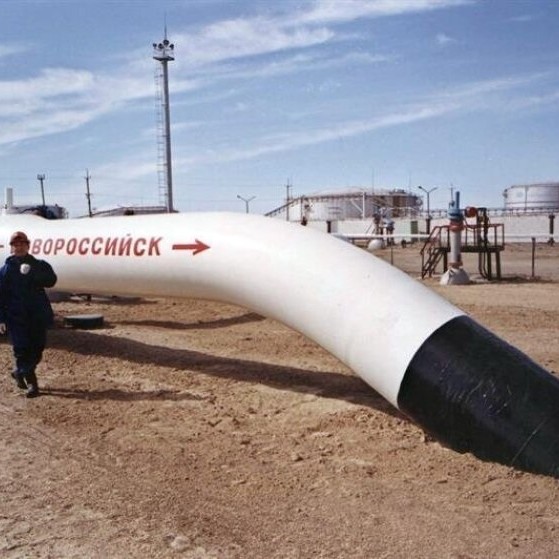
The CPC pipeline stretches over 1,500 kilometers from Kazakhstan to a Black Sea port near Novorossiysk, Russia, following the shortest and most economically viable route from the Caspian production basin to the sea.
| CPC Pipeline Statistics | Value |
|---|---|
| Average exports (past 3 months) | 1.7 million barrels/day |
| Exports to Europe | 1.42 million barrels/day |
| Exports to Asia | 280,000 barrels/day |
While this concentration offers efficiency under normal conditions, it becomes a critical vulnerability during crises. When the CPC shuts down, Kazakhstan doesn't merely lose one export route among many—it loses the backbone of its oil commerce.
Risks Amplified by the Ukraine Conflict
The ongoing war in Ukraine has dramatically intensified these dangers. The Novorossiysk region, home to the CPC terminal, has repeatedly faced drone attacks from Ukrainian forces, while vessels involved in CPC operations have confronted increasingly severe security threats. A November 2025 drone attack caused significant damage to one of CPC's single-point moorings, and repeated assaults on oil tankers throughout 2026 have eroded confidence among shipowners, charterers, and contractors.
As of July 21, CPC had ceased accepting crude oil from Kazakhstan following suspended export operations. By July 23, no official confirmation had been provided regarding full restoration of activities. While the terminal infrastructure remains physically intact, the commercial impact resembles physical devastation. Ship operators and major stakeholders, including ExxonMobil and Chevron, are refusing to call at the port, unwilling to risk their vessels and crews amid the sustained attacks.
European Markets Under Severe Threat
European markets, in particular, find themselves in a precarious position. Italy's Trieste port serves as the primary destination for global CPC exports, with a stable flow of 300,000 barrels daily, functioning as a lifeline for refineries in Austria, Czech Republic, and Germany. France, the Netherlands, Spain, and Greece also represent significant destinations.
A prolonged disruption would tighten supplies in the Mediterranean, forcing refineries to shift to Atlantic Basin crude oil grades. However, CPC Blend is not easily replaceable. It possesses approximately 45 degrees API gravity but contains around 0.6% sulfur, making it lower quality than grades such as Azeri Light or Saharan Blend. Refineries require sufficient desulfurization capacity to process this crude effectively.
| Key CPC Blend Characteristics | Specification |
|---|---|
| API Gravity | ~45° |
| Sulfur Content | ~0.6% |
| Main European Market Share | ~15% of EU imports (June 2026) |
Limited Alternative Solutions
Kazakhstan possesses several export alternatives, yet none can compensate for a major CPC disruption. The Atyrau-Samara pipeline can transport oil into Russia's Transneft system, but only handled approximately 220,000 barrels daily in 2025—well below its nominal capacity of around 350,000 barrels. These volumes, marketed as KEBCO, remain dependent on Russian pipelines and ports.
The Kazakhstan-China pipeline offers approximately 400,000 barrels of daily capacity but has been integrated into regional flows and is currently utilized for transporting Russian crude to China. Diverting any Kazakh volumes eastward would require substantial commercial and logistical adjustments.
The most frequently discussed non-Russian route involves transit from Aktau across the Caspian Sea to Baku, then through the Baku-Tbilisi-Ceyhan (BTC) pipeline. However, current volumes are only around 30,000 barrels daily, primarily because the Caspian Sea is extremely shallow, restricting vessels to a maximum deadweight of 15,000 tons—just 10% of a typical Suezmax tanker's capacity.
Unstable Energy Production Systems
Kazakhstan's vulnerability extends beyond transportation to production itself. The Karachaganak field, one of the country's three major oil and gas fields, depends on Russia's Orenburg gas processing plant, as the field produces liquids alongside substantial volumes of sulfur-containing gas. When Orenburg reduces intake volumes, Karachaganak must consequently cut gas production and, therefore, liquid output.
Following a June 24 drone attack on Orenburg, Karachaganak's liquid production decreased from approximately 34,000 tons daily to 25,000 tons—equivalent to a reduction of about 70,000 barrels daily. While this figure may not appear significant when viewed against total CPC exports, it represents a substantial impact for a field with 300,000 barrels of daily capacity.
The Tengiz field has introduced another layer of instability. A January fire and power outage temporarily halted production at Tengiz and the neighboring Korolev field, reducing output from approximately 900,000 barrels daily to 360,000 barrels and forcing Tengizchevroil operators to declare force majeure on CPC Blend supply, which dropped to around 880,000 barrels that month.
Current Situation and Future Outlook
Kazakhstan currently confronts a three-prone oil crisis: an export system concentrated on a war-vulnerable route, alternative corridors too small and unviable to compensate, and major fields experiencing frequent operational disruptions. The consequences extend beyond Kazakhstan's oil sector, as CPC and KEBCO together accounted for nearly 15% of the EU's total crude oil imports in June, while oil revenues support approximately half of Kazakhstan's national budget.
Higher regional prices may benefit other producers, but offer no protection for a producer unable to guarantee market access. Kazakhstan's challenge isn't a lack of oil or buyers—it's the increasing fragility of the infrastructure connecting these two elements.
As geopolitical tensions continue to reshape energy flows, Kazakhstan must urgently address its infrastructure vulnerabilities or risk forfeiting the strategic advantages its vast resources should otherwise provide in a post-conflict energy landscape.