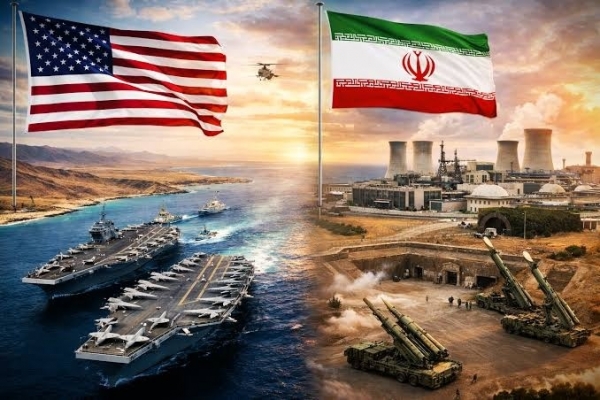
President Trump: Negotiations with Iran Still Underway Amid Rising Tensions
In the escalating geopolitical landscape between the United States and Iran, President Donald Trump has made a significant announcement indicating that his administration is considering two potential paths: continuing military operations or pursuing a diplomatic agreement with Tehran.
Background on Escalating Tensions
Relations between Washington and Tehran have reached unprecedented lows since President Trump withdrew the United States from the 2015 nuclear agreement. The imposition of stringent economic sanctions has subjected Iran to severe economic challenges, affecting its economy and population.
Tensions have recently escalated following the assassination of Iranian General Qasem Soleimani in a U.S. airstrike in Baghdad in January 2020. In response, Iran launched missiles at U.S. military bases in Iraq, pushing the region to the brink of a wider armed conflict.
President Trump's Statement
In a recent interview, President Trump stated: "We have two options. We can continue the military path, or we can seek a diplomatic agreement. I believe a diplomatic agreement is possible, but it must be a good deal for America."
The President emphasized that the United States is not seeking conflict with Iran but will protect its national interests. He also confirmed that backchannel negotiations with Iran are ongoing, though no significant progress has been made.
Analysis of the Options
President Trump's public consideration of both options indicates that the U.S. administration is at a crossroads in its Iran policy:
- Military Operations: Continuing military pressure, including airstrikes, deployment of additional naval vessels and bombers to the Persian Gulf region.
- Diplomatic Agreement: Pursuing a new agreement that could include restrictions on Iran's nuclear program, but with stricter terms than the 2015 agreement.
Comparison of Policy Options
| Option | Advantages | Disadvantages |
|---|---|---|
| Military Operations | ||
| Diplomatic Agreement |
Reactions from Stakeholders
Iran has reacted cautiously to President Trump's statement. Foreign Minister Mohammad Javad Zarif stated: "We are not seeking conflict, but we will defend our country if attacked. The United States must understand that the 'maximum pressure' policy has failed."
U.S. allies in the Middle East, including Israel and Saudi Arabia, support maintaining pressure on Iran but have expressed concerns about the risk of a major conflict.
In Europe, countries such as France, Germany, and the United Kingdom have called for restraint, emphasizing the importance of diplomacy to resolve the Iranian nuclear crisis.
Recent U.S.-Iran Relations Timeline
| Date | Key Events | Impact |
|---|---|---|
| May 2018 | U.S. withdraws from JCPOA nuclear agreement | Beginning of reimposition of sanctions |
| April 2019 | Iran announces reduced compliance with nuclear agreement | Tensions escalate |
| June 2019 | Tankers attacked in Gulf of Oman | U.S. blames Iran |
| January 2020 | Conflict narrowly avoided | |
| July 2020 | Tensions continue |
Impact on Region and World
Any decision by the United States regarding Iran will have profound implications for the Middle East region and the international community:
- Regional Security: A major conflict could destabilize the entire Middle East, affecting energy security and causing refugee flows.
- Energy Markets: Iran is one of the world's largest oil producers. Conflict could disrupt oil supplies, driving prices higher.
- International Policy: How the U.S. handles the Iran crisis will affect its standing and influence in the international arena.
Conclusion
President Trump's statement reveals that the United States is at a critical juncture in its Iran policy. Whether choosing military action or diplomacy, both options come with their own risks and challenges. Meanwhile, the situation in the Middle East continues to evolve with multiple stakeholders having competing interests.
The international community is watching developments closely, hoping that diplomacy will be prioritized to avoid a conflict that could have severe consequences for global peace and stability.