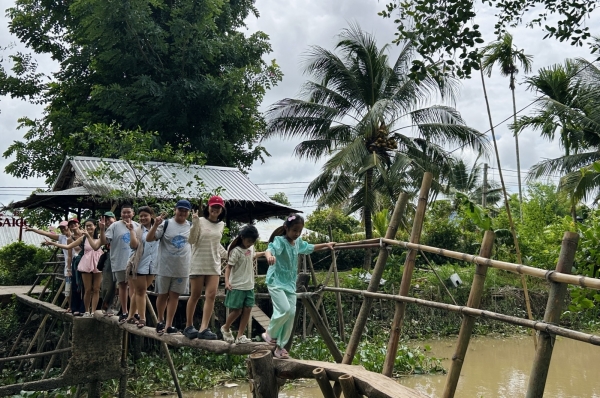
Community Tourism Revitalizes Green Island of Con Son
Once an isolated stretch of land nestled in the Hau River, Con Son, belonging to Can Tho City, has undergone a remarkable transformation to become one of the most prominent community tourism destinations in the Mekong Delta region. This evolution is attributed not only to its breathtaking natural landscapes but also to the collective efforts of local residents striving to preserve their cultural identity and maintain the green environment of this garden island.
The Transformation Journey
Con Son was once a remote and largely unknown territory. However, with the rise of tourism, local residents recognized the tremendous potential that community tourism could offer. They embarked on developing tourism services, ranging from homestays and fruit garden tours to traditional cultural activities.
- Homestay Accommodations: Many families have opened their homes to guests, providing lodging and immersive rural living experiences.
- Fruit Garden Tours: Tourists have the opportunity to taste specialty fruits of the Mekong Delta such as mangoes, longans, and coconuts.
- Cultural Activities: Visitors can participate in traditional activities like making local cakes, fishing, and enjoying regional specialty dishes.
Preserving the Garden Island's Character
To ensure sustainable tourism development, Con Son residents have committed to maintaining green spaces and the local cultural identity. They actively participate in environmental protection activities, such as tree planting and riverbank cleaning, to create a healthy environment for both residents and tourists.
Economic and Social Benefits
The development of community tourism has not only brought economic benefits to local residents but has also created job opportunities for many local workers. This has improved the living standards of the people while fostering a more united and cohesive community.
| Benefit Category | Specific Details |
|---|---|
| Economic | Increased income for local families, creation of employment opportunities for residents, development of supporting businesses. |
| Social | Enhanced community solidarity, improved environmental awareness, preservation of traditional knowledge and skills. |
| Cultural | Revitalization of local cultural practices through tourism activities, documentation and transmission of intangible cultural heritage. |
The Community-Led Development Model
What sets Con Son apart from other tourist destinations is its community-led development approach. Unlike top-down tourism development models, Con Son's transformation has been driven by the local residents themselves. This grassroots approach ensures that tourism development aligns with the community's values and needs.
The community has established various tourism cooperatives that help organize activities, set quality standards, and distribute benefits equitably among members. These cooperatives also play a crucial role in training local residents in hospitality, language skills, and other tourism-related competencies.
Environmental Sustainability Initiatives
Recognizing the importance of environmental preservation for long-term tourism success, Con Son has implemented several sustainability initiatives:
- Waste Management System: Implementation of a comprehensive waste segregation and recycling program to minimize environmental impact.
- Green Tourism Practices: Promotion of eco-friendly accommodations and activities that reduce carbon footprint.
- Conservation of Natural Resources: Protection of native flora and fauna through community-based conservation efforts.
Cultural Preservation and Promotion
The cultural heritage of Con Son is not merely a backdrop for tourism but an active component of the visitor experience. Local residents have made significant efforts to preserve and showcase their traditional practices:
Traditional music performances, folk games, and craft demonstrations are regularly organized for tourists. These activities not only provide authentic cultural experiences but also generate additional income for local artisans and performers. The community has also established cultural centers where visitors can learn about the history and traditions of the Mekong Delta region.
Challenges and Future Prospects
Despite its success, Con Son's community tourism faces several challenges. Balancing tourism growth with environmental protection, maintaining authenticity while meeting tourist expectations, and ensuring equitable distribution of tourism benefits remain ongoing concerns.
Looking ahead, Con Son aims to further develop its tourism products by incorporating digital technology for better visitor experiences, expanding into new markets, and enhancing the sustainability of its tourism operations. The community is also exploring partnerships with educational institutions to develop research programs that can support sustainable tourism development.
Conclusion
Con Son is gradually emerging as a shining example on the Mekong Delta tourism map, attracting visitors not only for its natural beauty but also for its meaningful stories about sustainable development and the residents' love for their homeland. Community tourism in Con Son continues to serve as a testament to the success of combining economic development with environmental protection, creating an ideal tourism model for other localities to emulate.
As the world increasingly values sustainable and responsible tourism, Con Son's community-driven approach offers valuable lessons in how tourism can be developed in harmony with local culture and environment, ensuring benefits for both residents and visitors while preserving the unique character of the destination for future generations.