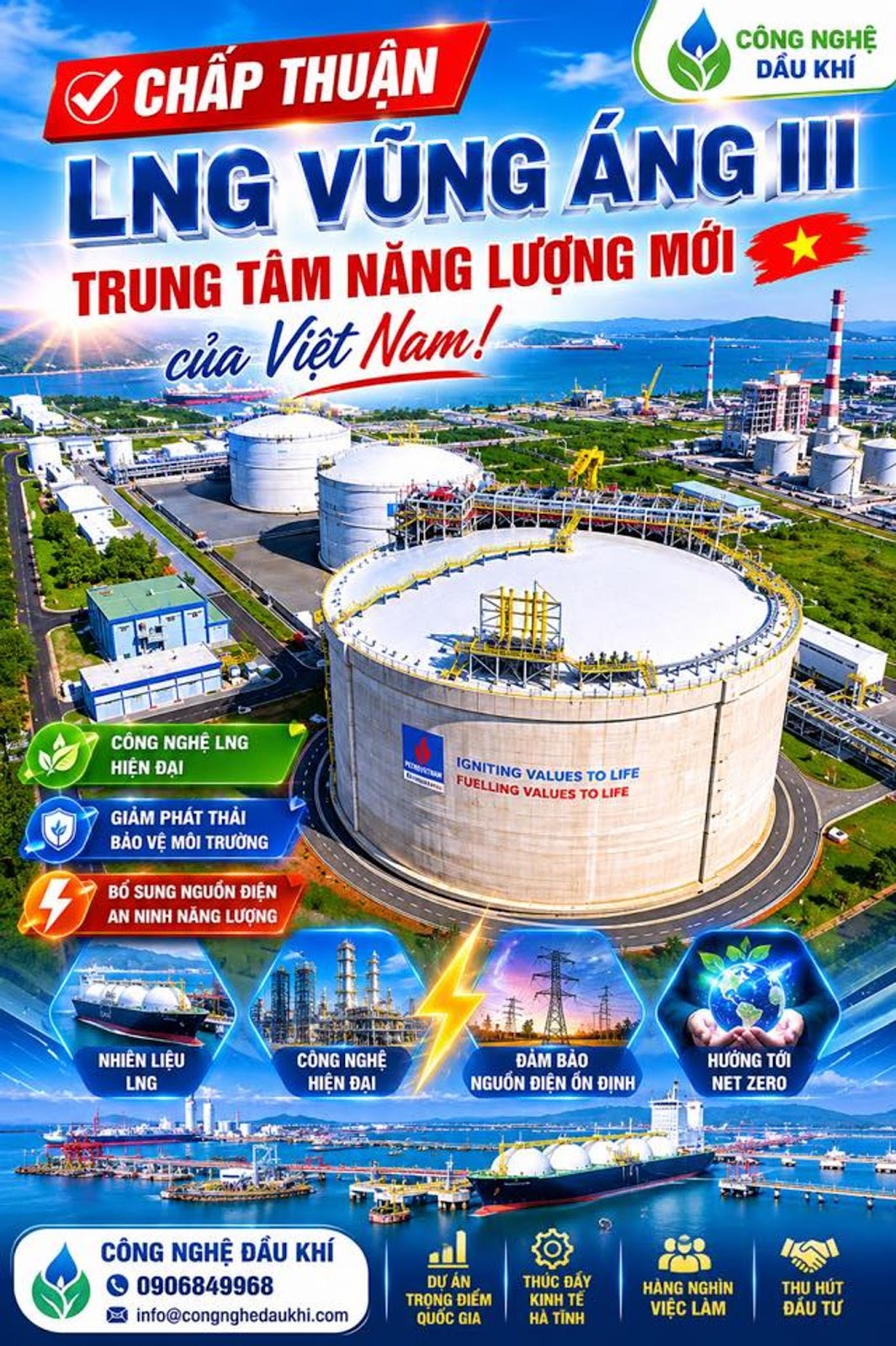
Approval of Investment Policy for Vung Ang III LNG Power Plant: Is Ha Tinh Entering a New Energy Era?
The recent approval of investment policy for the Vung Ang III LNG Power Plant in Ha Tinh province has captured significant attention from investors, the energy sector, and the business community. This project represents not merely a standalone power plant but a strategic component in Vietnam's ongoing energy transition from coal to liquefied natural gas (LNG).
In the context of rapidly increasing national electricity demand and potential electricity shortages in industrial zones between 2030-2035, the addition of a large-scale electricity source from LNG is viewed as an essential solution to ensure national energy security.
Project Overview
| Item | Details |
|---|---|
| Project Name | Vung Ang III LNG Power Plant |
| Location | Vung Ang Economic Zone, Ha Tinh Province |
| Fuel Type | Imported LNG |
| Plant Type | Combined Cycle Gas Turbine |
| Role | Supplementing base load power to the national grid |
| Objective | Ensuring long-term energy security |
Why Vung Ang III LNG Gains Special Attention
Unlike traditional coal-fired power plants, LNG technology significantly reduces CO2, SOx, and fine particulate matter emissions. This environmental advantage positions LNG as a critical technology in Vietnam's pursuit of its climate commitments while maintaining economic growth.
The key advantages of LNG power generation include:
- High Power Generation Efficiency
- Lower Emissions Compared to Coal
- Fast Startup Capability
- Alignment with Net Zero Trends
- Support for Renewable Energy Integration
Emission Comparison
| Fuel Type | CO2 Emission Level |
|---|---|
| Coal | Very High |
| Heavy Fuel Oil | High |
| LNG | 40-60% Lower than Coal |
| Wind Power | Near Zero |
| Solar Power | Near Zero |
Potential Investment Scale
Similar LNG projects in Vietnam typically require total investment ranging from:
35,000,000,000,000 VND to 60,000,000,000,000 VND
The exact investment amount depends on the plant's capacity, associated LNG terminal infrastructure, and transmission systems. If implemented comprehensively, the Vung Ang III LNG project could trigger numerous satellite developments, including:
- LNG storage facilities
- LNG receiving terminals
- Logistics systems
- Mechanical engineering industries
- Petroleum technical services
- Energy maintenance centers
Vung Ang as an Emerging National Energy Center
The Vung Ang Economic Zone already hosts several key projects, including:
- Deep-water Son Duong Port
- Formosa Ha Tinh Steel Complex
- Existing power plants
- Strategic transportation infrastructure of North Central Vietnam
The addition of Vung Ang III LNG could create a complete energy industrial cluster, similar to major energy centers in South Korea, Japan, and Singapore. This transformation would position Ha Tinh not only as an industrial hub but as Vietnam's new "energy capital" in the central region.
Expected Economic Impact
| Sector | Expected Impact |
|---|---|
| Energy Supply | Increased stable power supply |
| Employment | Thousands of direct and indirect jobs |
| Government Budget | Increased local revenue sources |
| Industry | Attraction of new FDI |
| Logistics | Increased demand for maritime transport |
| Petroleum | Expansion of LNG value chain |
Strategic Perspective
In Vietnam's Electricity Planning VIII, LNG power is identified as one of the pillars of the country's power system in the coming decades. As many coal power projects face challenges regarding environmental concerns and international funding, LNG has emerged as the most viable option to ensure electricity supply while meeting emission reduction commitments.
If implemented according to schedule, Ha Tinh could transform from an industrial center into the new "energy capital" of central Vietnam. This development would have far-reaching implications for the country's energy landscape and economic structure.
Conclusion
An investment decision made today could determine electricity supply for tens of millions of people and businesses for decades to come. The critical question now is whether Vung Ang III LNG will become a new growth driver or represent a massive challenge in terms of capital, technology, and infrastructure that Vietnam must overcome.
As Vietnam continues its energy transition, projects like Vung Ang III LNG demonstrate the country's commitment to balancing economic development with environmental responsibility. The success of this project could set a precedent for future energy developments in Vietnam and the broader Southeast Asian region.