Japanese Shipping Companies Exhibit Caution Amid Strait of Hormuz Reopening Reports
In a display of prudent risk management, Japanese shipping companies with vessels stranded near the Strait of Hormuz are not hastily acting on reports regarding an agreement to end hostilities between the United States and Iran, potentially leading to the reopening of this critical maritime chokepoint. According to Reuters, these companies will await formalization of the agreement, which is expected to be signed on Friday, before committing their vessels to transit the potentially sensitive waters.
The Current Situation at the Strait of Hormuz
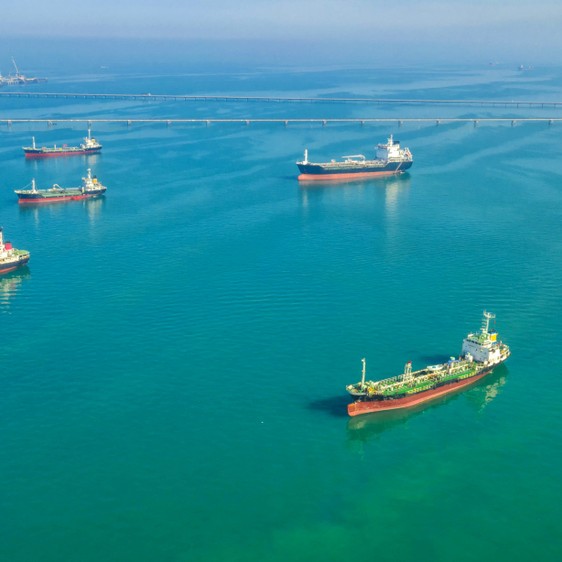
Since early March, when Iran closed the Strait of Hormuz in response to missile attacks by the United States and Israel during Washington-Tehran negotiations, several hundred oil tankers, LNG carriers, and cargo vessels have been stranded at this critical maritime bottleneck. The closure sent shockwaves through global energy markets and supply chains.
However, in recent weeks, there has been a gradual easing of restrictions. While initial vessel traffic was minimal—akin to "drops in the bucket"—maritime tracking companies report that flow has increased significantly in recent days. This partial reopening comes amid continued complications, as the U.S. naval blockade of Iranian ports has particularly disrupted Iran's export flows, adding further complexity to the global energy supply picture.
Japan's Position and Response
As an energy-poor nation, Japan stands among the world's most dependent countries on imported energy and other commodities from the Middle East. Consequently, Japan has a vested interest in the restoration of normal maritime traffic through the Strait of Hormuz. The strait serves as a vital artery for Japan's energy security, transporting approximately 90% of Japan's crude oil imports.
Despite this pressing need, Japanese shipping companies are demonstrating remarkable caution. Rather than immediately dispatching their vessels through the potentially hazardous waters, these companies are taking a measured approach. As reported by Reuters, Japanese shipping firms will "wait a bit more for more specific information" rather than attempting to navigate their ships out of Hormuz at the earliest opportunity.
Japan's Energy Dependence
| Energy Import Metric | Japan's Position | Global Context |
|---|---|---|
| Crude Oil Import Dependency | Approximately 99% | Among highest in industrialized nations |
| LNG Import Dependency | Approximately 97% | World's largest importer |
| Middle Eastern Oil Share | Approximately 90% of total imports | Critical to energy security |
| Strait of Hormuz Transit | Virtually 100% of Middle Eastern imports | Essential for supply chain integrity |
Recent Developments in the Region
In a significant development, a Japanese oil tanker has become the first vessel to be permitted passage through the Strait of Hormuz since the onset of hostilities and the subsequent closure of this vital waterway. This vessel represents one of the few ships that have successfully transited the strait without deactivating their transponders—a practice that has become increasingly common in recent weeks.
The deactivation of transponders, while allowing vessels to maintain a lower profile, has complicated efforts to accurately track maritime traffic and assess the true extent of disruptions. Nevertheless, the increasing number of ships with active transponders passing through the strait indicates a positive trend. This development has led to stronger flows out of the Persian Gulf and subsequent revisions in estimates of lost oil supply, which are now believed to be significantly lower than previously calculated.
Comprehensive Situation Analysis
| Factor | Current Status | Implications |
|---|---|---|
| Number of Stranded Vessels | Several hundred oil tankers, LNG carriers, and cargo ships | Global trade disruption; increased freight costs |
| Traffic Flow Through Strait | Increased from initial "trickle" but still below normal capacity | Gradual improvement in supply chain efficiency |
| Japanese Shipping Response | Cautious approach awaiting official confirmation | Risk mitigation; potential delay in supply normalization |
| Estimated Oil Supply Impact | Revised downward significantly from initial projections | Less severe impact on global energy markets than feared |
Impact on the Global Shipping Industry
The ongoing situation at the Strait of Hormuz has presented unprecedented challenges for the global shipping industry. The caution exhibited by Japanese shipping companies underscores the level of geopolitical risk that maritime operators must navigate in sensitive regions. With vessel values often exceeding hundreds of millions of dollars and cargo contents worth billions, the stakes are exceptionally high.
Industry experts note that despite positive developments regarding the potential reopening of the strait, shipping companies require official confirmation and comprehensive safety assurances before committing their multi-billion dollar assets to transit potentially hazardous waters. This prudent approach reflects the industry's recognition that geopolitical tensions can escalate rapidly, and the consequences of miscalculation can be severe.
The Strategic Importance of the Strait of Hormuz
The Strait of Hormuz stands as one of the world's most critical maritime chokepoints, with approximately 20% of globally traded crude oil passing through its narrow waters. The strait serves as the primary export route for oil from major producers in the Middle East, including Saudi Arabia, Iraq, Kuwait, and the United Arab Emirates.
For Japan, which imports nearly 100% of its energy requirements, stability in the Middle East represents a matter of economic survival. Any disruption to the flow of energy through the Strait of Hormuz would have immediate and profound consequences for Japanese industries, consumers, and overall economic stability. Consequently, Japanese shipping companies maintain constant vigilance regarding developments in this strategically vital region.
The current situation highlights the delicate balance between commercial imperatives and risk management that defines modern global shipping operations. As the world watches for the formal agreement between the United States and Iran, Japanese shipping companies stand as exemplars of measured caution in an uncertain geopolitical landscape.
By Irina Slav, Oilprice.com