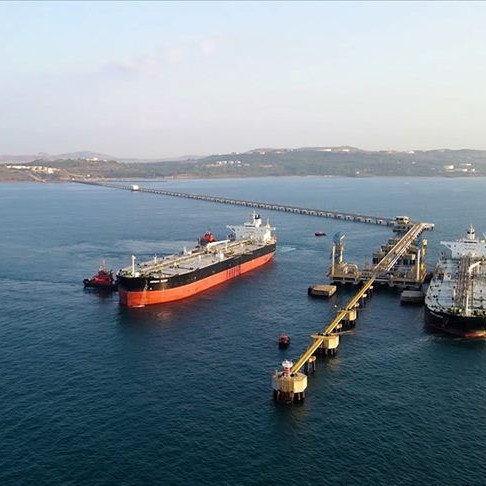
The Hormuz Blockade: Nations Rush to Secure Energy Infrastructure
The recent blockade of the Strait of Hormuz, once considered an unlikely scenario, has paralyzed approximately one-fifth of global LNG and crude oil flows, causing significant economic damage to both energy producers and consumers. In response, nations across the region are actively seeking ways to prevent such massive disruptions from occurring again.
Immediate Response from Saudi Arabia
Following the closure of the strait, the swiftest response came from Saudi Arabia, which immediately diverted exports through alternative pipeline routes. The kingdom demonstrated foresight by utilizing the East-West Pipeline to redirect crude oil flows from the Persian Gulf to the Red Sea, increasing transportation capacity through this pipeline to approximately 7 million barrels per day—far exceeding its previous capacity.
However, one of the major limitations of this redirection has been the loading capacity at the Yanbu port facility, an issue that Aramco will undoubtedly address in the near future. Notably, the risk of Iran closing the Strait of Hormuz was precisely the reason Saudi Arabia decided to construct the East-West Pipeline back in the 1980s, as emphasized by energy journalist Ron Bousso of Reuters in a comprehensive report on alternative oil and gas routes out of the Middle East following the Hormuz crisis.
UAE and the New Pipeline Project
The neighboring UAE, also a former OPEC member, is planning to construct a new pipeline to protect itself from potential disruptions at Hormuz. Currently, the nation already has a pipeline transporting oil to the port of Fujairah, located just outside the Strait of Hormuz. Now, they aim to double this pipeline's capacity from 1.8 million barrels per day to 3.6 million barrels per day, with an accelerated timeline. The new pipeline is expected to be completed by the end of next year.
Iraq's Infrastructure Enhancement Efforts
Iraq is also working to enhance its pipeline infrastructure. More than 90% of Iraq's oil exports typically transit through the Persian Gulf, making the country particularly vulnerable to disruptions at Hormuz. Exports, which had averaged over 3.3 million barrels per day before the conflict, have dropped to a fraction of that, causing a sharp decline in government revenue and forcing Baghdad to prioritize domestic energy security over export volumes. Production has fallen from over 4 million barrels per day to just over 1 million barrels per day.
Like the UAE, Iraq is seeking to upgrade existing pipeline infrastructure, specifically the Kirkuk-Ceyhan pipeline, which currently has a capacity of approximately 200,000 barrels per day. Baghdad is taking steps to increase its capacity to around 770,000 barrels per day and aims to complete this within the next few months. Additionally, Iraq is considering a network of other pipelines to Mediterranean ports in Syria and Jordan as a way to bypass Hormuz and minimize risks from disrupted oil tanker traffic.
Regional Pipeline Network Initiative
A separate initiative aims to build a pipeline network connecting Middle Eastern oil fields to Mediterranean port cities, with Turkey and Syria set to become key regional energy export hubs. "The post-Assad stability in Syria opens a narrow but historically decisive opportunity to transform the Levant from an energy conflict stage into an intercontinental energy corridor," the organization behind this initiative, the New Lines Institute, stated.
According to the New Lines Institute, "The Four Seas Initiative would deliver four cumulative strategic benefits: European energy autonomy from dependence on Russia and Iran; American commercial advantage in the most strategically important infrastructure in the Middle East; the economic reconstruction of Syria based on transit revenues; and a sustainable geopolitical reward for alignment with the West."
Turkey - The Regional Energy Center
Turkey is currently working to position itself as a regional energy center, particularly in the natural gas sector. The Four Seas Initiative would align well with Ankara's strategy, although this would also include transporting Russian gas. The initiative is estimated to cost approximately $10 billion—a sum that energy exporters would likely consider worthwhile if it helps mitigate risks from the geopolitical decisions of other nations.
Challenges for Kuwait and Qatar
However, some nations like Kuwait and Qatar face greater challenges in ensuring independence for their oil and gas exports. Kuwait and Qatar will need to rely on neighboring countries and their pipeline systems to avoid Hormuz, as Bousso's report indicated, due to their lack of domestic infrastructure. For Qatar, this is less than ideal given tensions with the UAE and Saudi Arabia, which it would need to rely on to minimize dependence on Hormuz.
On the other hand, the risk of a repeat of the Hormuz scenario—previously considered unthinkable—now appears relatively low unless conflicts continue to escalate.
Regional Pipeline Projects Overview
| Country | Project | Current Capacity | Planned Capacity | Timeline |
|---|---|---|---|---|
| Saudi Arabia | East-West Pipeline | Low volume | 7 million barrels/day | Operational |
| UAE | Fujairah Pipeline | 1.8 million barrels/day | 3.6 million barrels/day | End of next year |
| Iraq | Kirkuk-Ceyhan Pipeline | 200,000 barrels/day | 770,000 barrels/day | Next few months |
| Turkey/Syria | Four Seas Initiative | Not applicable | Network development | Long-term |
Strategic Implications
The development of these alternative pipeline routes represents a significant shift in Middle Eastern energy strategy. For decades, the Strait of Hormuz has been the primary chokepoint for regional energy exports, with little investment in alternatives. The recent blockade has demonstrated the vulnerabilities of this approach and has accelerated plans for diversification.
These infrastructure developments also carry significant geopolitical implications. By reducing dependence on the Strait of Hormuz, Middle Eastern nations can gain more leverage in international energy markets and reduce their vulnerability to regional conflicts. The emergence of new energy corridors through Turkey and Syria could potentially reshape the region's energy landscape.
As these projects move forward, the global energy market will likely see increased stability in the long term, though the transition period may present additional challenges. The investments being made today will determine the resilience of energy supplies in the Middle East for decades to come.
— Irina Slav for Oilprice.com