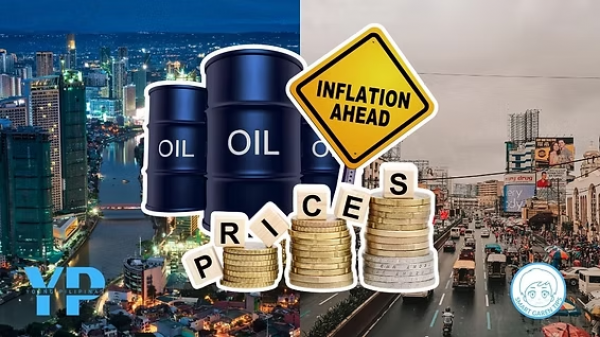
US-Iran Agreement: Why Lower Oil Prices May Not End Persistent Inflation
A recently announced agreement between Washington and Tehran has immediately calmed financial markets, with oil prices falling and stock markets rising. However, this geopolitical cooling may not be sufficient to eliminate the inflationary pressures plaguing global economies.
The US-Iran Agreement: An Unexpected Breakthrough
Last weekend, news of an indirect agreement between the United States and Iran regarding prisoner exchange sent shockwaves through global energy markets. The agreement is expected to pave the way for Iran to sell more oil internationally, thereby easing supply tensions that have been contributing to high energy prices.
According to diplomatic sources, the agreement focuses on prisoner exchanges and could lead to the easing of certain sanctions against Tehran. This represents a significant diplomatic step forward after years of heightened tensions between the two nations.
Immediate Impact on the Oil Market
Following the announcement, crude oil prices dropped significantly. Brent crude fell approximately 3%, while US WTI crude declined around 2.5%. This volatility reflects expectations that oil supplies from Iran will increase in the coming months.
Projected Supply Increase from Iran:
| Scenario | Estimated Oil Increase (thousand barrels/day) | Impact on Oil Prices |
|---|---|---|
| Optimistic | 500-700 | Decrease of $5-7 per barrel |
| Moderate | 300-500 | Decrease of $3-5 per barrel |
| Cautious | 100-300 | Decrease of $1-3 per barrel |
However, energy experts note that Iran will require time to increase production. Sanctions remain in place, and restoring Iran's oil production capacity could take several months.
Financial Market Reactions
The optimism regarding increased oil supply has spread to other financial markets:
- Global stock markets rally: Major indices in the US, Europe, and Asia all rose following news of the US-Iran agreement.
- US dollar weakens: Expectations of reduced inflation caused the dollar to depreciate against other major currencies.
- Gold prices increase: Gold rose approximately 1% as investors sought safe-haven assets.
Key Market Movements Following the Agreement Announcement
| Market | Movement | Reason |
|---|---|---|
| Brent Crude | Down 3.2% | Expectation of increased supply |
| WTI Crude | Down 2.8% | Expectation of increased supply |
| S&P 500 Index | Up 1.5% | Lower inflation expectations |
| USD Index | Down 0.6% | Expectation of Fed slowing rate hikes |
| Gold | Up 1.2% | Seeking safe-haven assets |
Why Lower Oil Prices Aren't Enough to Control Inflation
While falling oil prices are good news for inflation, economists point out that this factor alone isn't sufficient to solve the global inflation equation:
- Inflation Lag Effect: The impact of oil prices on inflation typically has a lag of 3-6 months. Current oil price declines will only begin to affect consumer price indexes in the final quarter of this year or early next year.
- Insufficient Price Reduction: Despite the decrease, oil prices remain higher than pre-pandemic levels. Brent crude is currently around $85 per barrel, higher than the $70 average during the 2015-2019 period.
- Other Inflationary Pressures: Today's inflation stems not only from oil prices but also from rising labor costs, high housing prices, and ongoing supply chain issues.
- Anchored Inflation Expectations: Consumers and businesses have come to expect high inflation over the long term, which could create an inflation-wage spiral.
Future Outlook
Prospects for the US-Iran Agreement:
- The implementation of the agreement depends on various political factors and could stall if tensions escalate.
- Nevertheless, mere potential for increased Iranian production has already had a psychological impact on markets.
- OPEC+ might intervene by reducing production to offset supplies from Iran.
Oil Price Forecast for Medium and Long Term:
- Short-term (next 3 months): Oil prices may continue declining if the agreement is implemented smoothly.
- Medium-term (6-12 months): Oil prices could stabilize at $75-85 per barrel.
- Long-term: Oil prices will depend on the pace of energy transition and global demand.
Conclusion
The US-Iran agreement is positive news for global energy and financial markets. Lower oil prices will help reduce inflationary pressure in the medium term. However, policymakers and investors must recognize that inflation is a multi-dimensional issue that cannot be resolved by a single factor.
Major central banks, particularly the US Federal Reserve, will continue to closely monitor inflation indicators and adjust monetary policy accordingly. Meanwhile, investors should diversify their portfolios to navigate unpredictable market fluctuations.