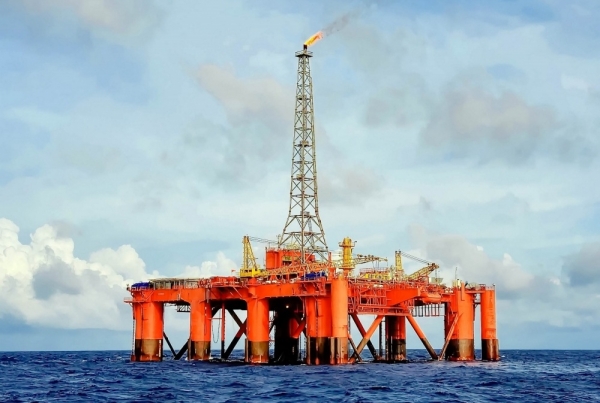
The Miracle of Offshore Oil: The Revival of Vietnam's Dai Hung Oil Field
Once considered one of the most promising oil and gas reserves on Vietnam's continental shelf, the Dai Hung oil field has experienced a remarkable journey of peaks and valleys throughout its operational history. After decades of production, this significant oil field faced severe production decline, raising concerns about its economic viability and future sustainability. However, against all odds, the field has undergone a spectacular transformation, emerging as a testament to technological innovation, human resilience, and strategic vision in the global energy sector.
The Evolution of Vietnam's Offshore Oil Industry
Vietnam's offshore oil industry began developing in the late 20th century when the country recognized the potential of its vast maritime resources. The discovery of the Dai Hung oil field in the 1980s marked a significant milestone in the nation's energy exploration journey. Located approximately 240 kilometers southeast of Vung Tau in the Cuu Long Basin, the field was initially developed through a joint venture between international energy companies and Vietnam's state-owned PetroVietnam.
The field's development coincided with Vietnam's economic reforms (Đổi Mới) in the late 1980s, making it a crucial component of the country's strategy to achieve energy self-sufficiency and generate export revenue. At its peak, the Dai Hung field contributed substantially to Vietnam's GDP and became a symbol of the nation's emerging presence in the global energy market.
Challenges in the Early Development Phase
The initial development of the Dai Hung oil field presented numerous technical and logistical challenges. Situated in waters with depths ranging from 50 to 70 meters, the field required specialized drilling and production platforms capable of withstanding harsh marine conditions. The reservoir's geological complexity, characterized by heterogeneous formations and varying pressure zones, further complicated extraction processes.
Despite these challenges, production commenced in the early 1990s with an initial output of approximately 500,000 tons of oil annually. The field quickly established itself as a significant contributor to Vietnam's energy portfolio, with production peaking at 1 million tons in 1995. However, this initial success was short-lived as reservoir pressure began to decline naturally, leading to reduced extraction efficiency.
| Year | Key Development | Oil Production (Tons) | Significance |
|---|---|---|---|
| 1990 | Commencement of production | 500,000 | Initial development phase |
| 1995 | Peak production reached | 1,000,000 | Maximum economic contribution |
| 1999 | Transfer to Vietnam | 300,000 | Strategic ownership change |
| 2005 | Severe production decline | 150,000 | Critical turning point |
The Turning Point: Ownership Transfer in 1999
As production continued to decline throughout the late 1990s, the international partners operating the DaiHung field faced diminishing returns on their investment. In 1999, amidst falling global oil prices and increasing extraction costs, the joint venture made the unprecedented decision to transfer the entire project to Vietnam's PetroVietnam for a symbolic price of just $1 USD. This transfer marked a pivotal moment in Vietnam's energy history, representing both a challenge and an opportunity for the national oil company.
The transfer was more than a simple business transaction; it symbolized Vietnam's growing confidence in its technical capabilities and strategic vision for the energy sector. By taking full control of the field, PetroVietaimed to implement new approaches to reservoir management and production optimization that could potentially reverse the decline trend.
Technological Innovation and Revival Strategies
Facing the daunting task of revitalizing a declining oil field, PetroVietnam embarked on an ambitious program of technological innovation and operational excellence. The company assembled a multidisciplinary team of reservoir engineers, production specialists, and technology experts to develop comprehensive strategies for enhancing recovery rates and extending the field's operational lifespan.
One of the most significant initiatives involved the implementation of advanced reservoir characterization techniques. By utilizing 3D seismic imaging and sophisticated reservoir simulation software, engineers gained unprecedented insights into the field's geological structure and fluid dynamics. This improved understanding enabled more precise placement of wells and optimized extraction methods.
The company also invested heavily in enhanced oil recovery (EOR) technologies, including water injection systems to maintain reservoir pressure and chemical treatments to improve oil mobility. These interventions, combined with the installation of new subsea equipment and upgraded processing facilities, gradually began to yield positive results.
Collaboration with International Partners
While PetroVietnam assumed full operational control of the Dai Hung field, the company recognized the value of maintaining collaborative relationships with international energy companies. Through technical assistance agreements and knowledge-sharing partnerships, Vietnamese engineers gained access to cutting-edge technologies and best practices from global leaders in the oil and gas industry.
These collaborations proved instrumental in developing tailored solutions specific to Dai Hung's unique geological characteristics. International experts provided valuable insights into advanced drilling techniques, reservoir management strategies, and production optimization methods that had been successfully implemented in similar fields worldwide.
Measurable Results of the Revival
The systematic implementation of new technologies and operational strategies began to yield tangible results within just a few years. By 2010, production from the Dai Hung field had stabilized at approximately 200,000 tons annually, representing a significant improvement from the low point of 150,000 tons in 2005. More impressively, the field demonstrated enhanced operational efficiency with reduced production costs and improved recovery rates.
By 2015, the field had surpassed even the most optimistic projections, with production reaching 250,000 tons annually. This remarkable turnaround not only extended the field's operational lifespan by an estimated 15-20 years but also positioned it as one of the most successfully revitalized mature oil fields in the Asia-Pacific region.
| Time Period | Production Rate | Technology Applied | Key Achievement |
|---|---|---|---|
| 1990-1995 | Increasing to 1M tons | Conventional extraction | Initial peak production |
| 1996-2005 | Declining to 150K tons | Basic maintenance | Production crisis |
| 2006-2010 | Recovery to 200K tons | Advanced reservoir modeling | Stabilization phase |
| 2011-Present | Sustained at 250K tons | EOR technologies | Sustainable production |
Economic and Strategic Significance
The successful revival of the Dai Hung oil field has yielded substantial economic benefits for Vietnam. The field now contributes approximately $150-200 million annually to the national budget, providing crucial revenue for infrastructure development and social programs. Beyond direct financial contributions, the field supports thousands of indirect jobs in related industries, from offshore supply services to engineering and technical support.
From a strategic perspective, the DaiHung project has strengthened Vietnam's energy security by reducing dependence on imported fuels and providing a stable source of foreign exchange through exports. The field's successful revitalization has also enhanced Vietnam's reputation as a capable operator in the offshore oil sector, opening new opportunities for international partnerships and technology transfer.
Environmental and Operational Sustainability
In line with global trends toward sustainable energy development, PetroVietnam has implemented comprehensive environmental management systems at the Dai Hung field. These include advanced waste treatment facilities, regular environmental monitoring programs, and strict protocols to prevent oil spills and marine pollution. The company has also invested in energy-efficient equipment and practices to reduce the field's carbon footprint.
Moreover, the successful extension of the field's operational lifespan through technological innovation represents a form of resource sustainability. By maximizing recovery from existing infrastructure rather than developing new fields, the company has minimized the environmental impact associated with exploration and construction activities.
Lessons for the Global Energy Sector
The remarkable turnaround of the Dai Hung oil field offers valuable insights for the global energy industry. The project demonstrates that mature oil fields can remain economically viable through technological innovation and strategic management, challenging the conventional wisdom that production decline is inevitable after peak extraction.
The case also illustrates the importance of local capacity building and knowledge transfer in energy development projects. By investing in technical expertise and developing indigenous capabilities, Vietnam has transformed what could have been a liability into a valuable national asset.
Future Prospects and Challenges
Looking ahead, the Dai Hung oil field faces several challenges, including the global transition toward renewable energy sources and the need to maintain production efficiency as the field continues to mature. PetroVietnam has responded by diversifying its portfolio to include renewable energy projects while continuing to optimize operations at existing oil and gas assets.
The company is also exploring the application of digital technologies, including artificial intelligence and IoT sensors, to further enhance production efficiency and extend the field's operational lifespan. These innovations position Dai Hung as a model for digital transformation in the traditional energy sector.
Conclusion: A Testament to Human Ingenuity
The remarkable journey of the Dai Hung oil field from promising discovery to decline and eventual revival represents more than just a technical achievement. It stands as a powerful testament to human ingenuity, resilience, and the capacity to overcome seemingly insurmountable challenges through innovation and determination.
As the global energy landscape continues to evolve, the lessons from Dai Hung will remain relevant. The project demonstrates that with the right combination of technology, expertise, and strategic vision, even mature oil fields can contribute meaningfully to national development and energy security for decades to come. The "miracle of offshore oil" in Vietnam is not just about hydrocarbons—it's about the power of human potential to transform challenges into opportunities.