KKR Makes $4.2 Billion Investment in Largest Renewable Energy Deal in History with EDF Acquisition
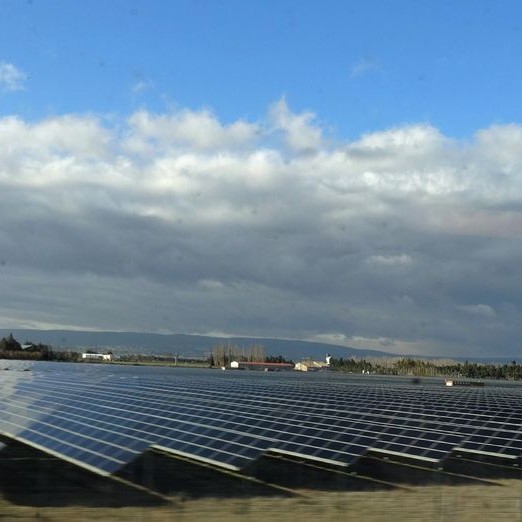
Global investment firm KKR has agreed to acquire EDF Power Solutions North America in a landmark $4.2 billion deal, marking the largest renewable energy investment in the company's history. The acquisition immediately grants KKR control of one of North America's largest clean energy portfolios, adding more than 5.6 gigawatts (GW) of operational wind, solar, and battery storage assets as investors scramble to secure power supply for AI data centers and other rapidly growing electricity demands.
Creating a Clean Energy Giant in North America
This acquisition immediately positions KKR as one of the largest owners of renewable energy assets in North America. EDF Power Solutions has developed over 26 GW of wind, solar, and battery storage projects in nearly 40 years and operates one of the continent's largest clean energy portfolios.
The deal reflects a broader trend of major investors seeking to penetrate the renewable energy market as global electricity demand accelerates, particularly from AI data centers and other high-tech industries.
Transaction Details and Strategic Vision
KKR will finance the transaction through its global infrastructure strategy. The acquisition allows the firm to capitalize on the insatiable energy demand driven by the AI boom. To date, KKR has deployed over $26 billion globally across renewable energy and transition strategies.
Below is a summary table of key information about the transaction:
| Parameter | Details |
|---|---|
| Transaction value | $4.2 billion |
| Acquired company | EDF Power Solutions North America |
| Acquiring company | KKR |
| Asset capacity acquired | Over 5.6 GW |
| Asset types | Wind, solar, and battery storage |
| KKR's total investment in renewable energy | Over $26 billion |
Drivers Behind the Acquisition
From EDF's perspective, the sale aligns with the group's portfolio rotation strategy. The French giant will use the freed-up cash to maintain its 57 domestic nuclear reactors and finance six new nuclear units in Europe.
EDF, Europe's largest state-owned utility, is focusing on maintaining and expanding its nuclear power capacity, viewing it as a stable, low-emission energy source compared to fossil fuels.
KKR's Global Expansion Strategy
KKR has recently made a series of investments in renewable energy. Most recently, KKR and South Korea's SK Inc. have signed final agreements to launch the nation's largest integrated renewable energy platform, valued at 2 trillion KRW ($1.3 billion).
The platform begins operations with approximately 1.7 GW of existing clean energy assets, with plans to expand total electricity capacity to 10 GW. The platform consolidates previously distributed renewable operations across multiple SK subsidiaries, including solar, onshore and offshore wind, fuel cells, and energy storage systems (ESS).
This strategy demonstrates KKR's active position-building in the global renewable energy market, focusing on both acquiring existing companies and developing new platforms.
Impact on the Renewable Energy Market
KKR's significant investment in renewable energy reflects a market shift as large investment firms recognize the growth potential and profitability of the clean energy transition. Participation from funds like KKR can help accelerate the energy transition by providing substantial capital and management expertise.
Demand from AI data centers is creating particular pressure on electrical grids, driving the need for rapidly scalable renewable energy. Major technology companies are seeking to secure stable, renewable power supplies to support the growing operations of AI data centers.
The Future of the Renewable Energy Sector
This deal may signal a broader trend in the energy industry where large institutional investors participate more deeply in the renewable energy market. Participation from companies like KKR can help address financial and technical challenges in developing and operating large-scale clean energy projects.
Additionally, the focus on energy storage solutions like batteries reflects an awareness of the need to address the intermittency of wind and solar power. Energy storage will play an increasingly important role in grid stability as the share of renewable energy increases.
Conclusion
KKR's $4.2 billion acquisition of EDF Power Solutions North America is not just a major transaction in the renewable energy sector but reflects a significant shift in investment strategy. Institutional investors are recognizing the immense potential of renewable energy, particularly in the context of rapidly growing demand from AI technology and other industries.
The deal also illustrates the strategic shift of traditional energy companies like EDF, focusing on their core strengths while selling non-core assets to restructure their portfolios. Participation from investors like KKR can help accelerate the global energy transition, bringing both economic and environmental benefits.