Iran Launches Retaliatory Strike Against US: Trump Declares Ceasefire Over
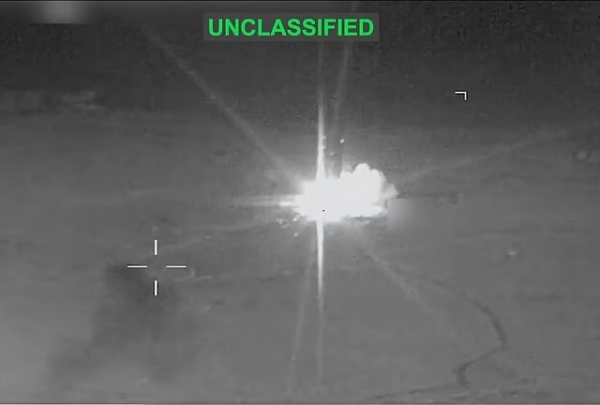
Tehran has executed a large-scale attack on US military facilities in the Middle East, marking a significant escalation in tensions between the two nations following President Donald Trump's declaration that the ceasefire has ended.
Escalating Tensions: The Backstory
The relationship between the United States and Iran has deteriorated into a state of persistent tension since Washington's withdrawal from the 2018 nuclear agreement and the reimposition of severe sanctions. The conflict reached its peak earlier this year with the assassination of General Soleimani—the spiritual leader of Iran's Islamic Revolutionary Guard Corps (IRGC)—by the United States in Baghdad, Iraq.
In response, Iran conducted missile attacks on US military bases in Iraq, but tensions subsequently subsided when both sides declared they would not further escalate the situation. However, President Trump's recent remarks have completely altered the landscape of this conflict.
Details of the Retaliatory Attack
According to information from Iran's Islamic Revolutionary Guard Corps (IRGC), the force has carried out a large-scale attack on 85 US military facilities in Bahrain and Kuwait. This action is being directly framed as retaliation for Washington's previous airstrike.
Tehran sources indicate that the attack utilized both ballistic missiles and unmanned aerial vehicles (UAVs), causing significant damage to US military installations. The IRGC has stated that this attack represents "only a small part of the retaliation" and that further actions will be taken if the US continues hostile activities.
Bahrain and Kuwait—two Gulf nations with close military ties to the United States—have become targets of this attack, indicating that Iran is expanding the scope of its retaliation beyond the territories of Iraq and Syria, where previous confrontations have occurred.
Reactions from Key Stakeholders
Immediately following the attack, US President Donald Trump made startling statements on social media: "The ceasefire is over. Iran will be held accountable for its reckless actions. We have military options far more powerful than they can possibly imagine."
US Defense Secretary Mark Esper also commented: "We are assessing the situation and will respond appropriately. US forces in the Middle East have been placed at the highest level of alert."
At the United Nations, US Ambassador Kelly Craft convened an emergency meeting of the Security Council to discuss the situation. Meanwhile, Iranian Foreign Minister Mohammad Javad Zarif affirmed that the attack was "a legitimate act of self-defense" under the United Nations Charter.
Strategic Analysis of the Current Situation
International experts note that Iran's attack marks a new phase in US-Iran tensions. Rather than limiting themselves to controlled counterattacks as in the past, Tehran is now shifting to a strategy of direct assaults on US military bases in allied countries.
The following table summarizes key developments in the US-Iran conflict:
| Timeline | Key Event | Escalation Level |
|---|---|---|
| May 2018 | US withdraws from nuclear agreement JCPOA | Tension onset |
| April 2019 | Iran begins reducing compliance with nuclear agreement | Escalation |
| January 2020 | US assassinates General Soleimani | Crisis peak |
| January 2020 | Iran attacks US bases in Iraq | High tension |
| March 2020 | Both sides declare no further escalation | Temporary calm |
| May 2023 | Iran attacks 85 US military facilities in Bahrain and Kuwait | Significant re-escalation |
Regional and Global Implications
The latest Iranian attack could have severe consequences for security in the Gulf region. Bahrain and Kuwait—nations that have attempted to maintain balanced relations between the US and Iran—are now at the center of this conflict.
Economically, escalating tensions could cause oil prices to surge, impacting global energy markets. Critical maritime shipping routes such as the Strait of Hormuz—through which 30% of global oil shipments pass—are once again becoming potential flashpoints.
Europe and other nations participating in the nuclear deal JCPOA have expressed concern about the escalation and called for restraint from both sides. However, the prospects for diplomatic intervention to de-escalate the situation have become more challenging than ever.
Conclusion: An Uncertain Future
With President Trump's declaration that "the ceasefire is over" and Iran's large-scale attack, the Middle East region now faces the risk of direct military conflict between the two powers. The situation could evolve in several possible directions:
- Both sides may continue to escalate with reciprocal attacks
- The US may implement direct military actions into Iranian territory
- Other Middle Eastern nations could be drawn into the conflict
- International diplomatic efforts may be intensified to prevent military conflict
In this context, civilians in both the US and Iran, as well as people across the region, are expressing concern about a potential conflict that could lead to humanitarian disaster and further exacerbate global instability. Only time will tell whether a diplomatic exit can be found for this crisis.