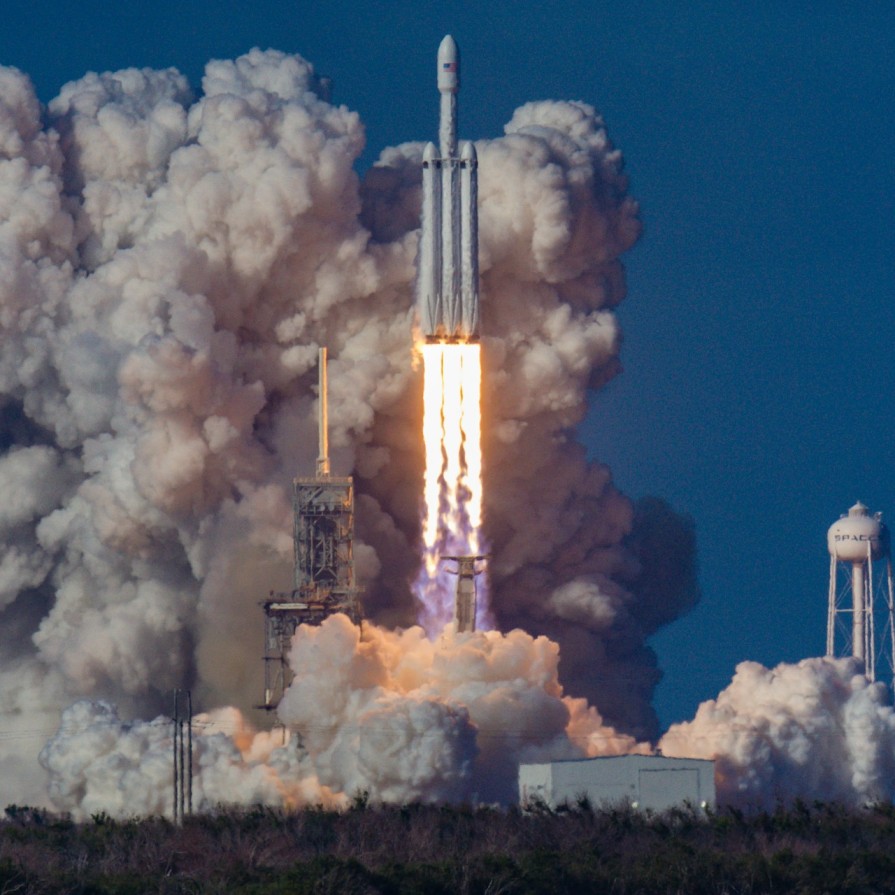
Linde Poised to Dominate Rocket Fuel Market as SpaceX IPO Approaches
In a significant development ahead of SpaceX's highly anticipated initial public offering (IPO), analyst Tony Jones from Rothschild & Co Redburn has published a comprehensive report on space economics, identifying a leading industrial gas company exceptionally positioned to dominate the critical rocket fuel and launch propellant market. As SpaceX accelerates Starship launch frequencies and the broader space economy is projected to double by 2035, Linde appears to be in an advantageous position to capture substantial market share in this rapidly expanding sector.
Positive Analyst Evaluation
Jones and his team have reiterated a "Buy" rating on Linde while raising their 12-month price target to $560 from $550, informing clients on Tuesday that the company has built a formidable "moat" in the industrial gas sector after supplying energy for U.S. rocket launches throughout the past 60 years. This long-standing relationship with space agencies and commercial launch providers positions Linde uniquely as space exploration enters a new era of increased activity.
Starship as a Growth Catalyst
The Rothschild & Co Redburn securities research team views SpaceX's Starship as a "demand accelerator," with higher launch frequencies and heavier fuel loads creating new leverage for Linde's critical gas business. The analysis suggests that Linde generates approximately $4 million in revenue per average space launch in 2025. By 2028, this figure could approach $6 million as Starship launches increase significantly, driving demand for liquid oxygen, nitrogen, helium, cryogenic services, rare gases, and capacity fees.
Key Points from the Analysis Report
The White Space - Growth Opportunity
Linde has supplied fuel to NASA for 60 years and currently has capital expenditure (capex) expected to increase alongside SpaceX's Starbase. The economic analysis reveals positive prospects as Linde's space business currently represents about 2% of total revenue but could expand rapidly as the Starlink ecosystem forms. This relatively small portion of Linde's business presents significant upside potential as commercial space activities accelerate.
Starship - The Demand Multiplier
The transition to Starship as a dominant vehicle could transform opportunities, burning approximately 10 times more oxygen than a Falcon 9 launch. Linde's revenue per launch could reach nearly $6 million by 2028, up from under $4 million in 2025. This growth trajectory is expected to unfold on a platform potentially characterized by exponentially increasing launch frequencies. The shift to more frequent and larger-scale launches represents a fundamental change in the economics of space access.
Project Backlog and EPS Options
Linde's space-related capital investment lies outside its core gas business operations, without "take-or-pay" commitments. However, contracts appear viable, and the research team suggests the project backlog could be adjusted upward as a clear valuation catalyst. Earnings per share (EPS) growth could be accelerated. Linde is characterized as a robust enterprise with top-tier management, which provides additional confidence in its ability to execute on space-related growth opportunities.
Revenue Projections and Growth Outlook
Jones estimates that Linde will generate revenue from space launches as follows:
| Year | Average Revenue Per Launch |
|---|---|
| 2025 | Nearly $4 million |
| 2028 | Approaching $6 million |
Projected Starship Launch Frequency
SpaceX has indicated that 140-160 launches are planned for 2026, with most being Falcon 9 flights. Starship launches may initially remain experimental, with a key milestone being successful achievement of optimal range. The gradual transition from Falcon 9 to Starship represents a multi-year process with increasing commercial and scientific payloads as the new vehicle proves its reliability and cost-effectiveness.
Elon Musk previously stated: "Starship should perform >1000 Earth orbital flights per year by 2028. That number is still low relative to what's needed to build a self-sustaining city on Mars and ensure the continuance of consciousness." This ambitious vision underscores the potential scale of expansion in space activities that could benefit Linde's business significantly.
Linde's Market Share and Competitive Position
Starship dominates rocket propellant usage among space vehicles this year. Linde, with 60 years of experience supplying fuel to U.S. space programs, holds a unique position to benefit from the space industry's explosion. The company's established infrastructure, technical expertise, and long-standing relationships with space agencies and commercial launch providers create barriers to entry that competitors would find difficult to overcome.
The research team believes Linde's earnings growth could be accelerated if multiple growth leverage factors align:
- Increased rocket launch frequencies
- Optimized space-related capital investment
- Long-term contracts with major space partners
- Expansion into new industrial gas markets
Competitive Landscape Analysis
The industrial gas sector has traditionally been dominated by a few global players, with Linde competing against companies like Air Products and Chemicals, Air Liquide, and Praxair. However, the specialized requirements of space-grade propellants and cryogenic fuels create a niche where Linde's decades of experience with NASA and other space agencies provides a significant competitive advantage. The company's existing infrastructure for producing and handling liquid oxygen, liquid hydrogen, and other cryogenic fluids can be scaled efficiently to meet the demands of increased launch activities.
Financial Implications and Market Impact
The positive evaluation from Rothschild & Co Redburn reflects growing confidence in Linde's strategic positioning within the evolving space economy. As SpaceX approaches its IPO and Musk outlines ambitious plans for Starship, Linde appears well-positioned to become the premier fuel supplier for future space operations. The analyst's decision to raise the price target from $550 to $560, while seemingly modest, indicates confidence in Linde's long-term potential within the rapidly expanding space industry.
The projected revenue growth from space operations represents a significant opportunity for Linde to diversify its revenue streams beyond traditional industrial gas applications. While space-related revenue currently constitutes only a small portion of Linde's total business, the high growth potential and increasing commercialization of space activities suggest this segment could become increasingly important to the company's overall financial performance.
Technological Considerations and Infrastructure Requirements
The transition to more frequent and larger-scale launches like Starship necessitates substantial technological and infrastructure investments. Linde's existing capabilities in cryogenic storage, transportation, and handling position the company well to meet these requirements. The production of space-grade propellants demands exceptional purity and consistency, standards that Linde has maintained through decades of supporting space programs.
As launch frequencies increase, the ability to reliably supply large quantities of propellants becomes increasingly critical. Linde's established supply chains and production facilities can potentially be optimized to meet these demands more efficiently than competitors without similar experience in the space sector.
Strategic Implications for the Space Industry
The growing importance of propellant suppliers like Linde reflects the broader commercialization of space activities. As private companies increasingly drive innovation in space technology, the supporting infrastructure and supply chains necessary to enable these activities become valuable assets in their own right. The relationship between launch providers and propellant suppliers is likely to become increasingly sophisticated and mutually beneficial as the space economy matures.
SpaceX's Starship program, with its emphasis on rapid reusability and high launch cadence, represents a paradigm shift in space access. This shift creates new opportunities for suppliers who can adapt to the unique requirements of this new launch paradigm. Linde's long-standing relationships with space agencies and its technical expertise position the company to play a crucial role in enabling this new era of space exploration.
Conclusion
The positive assessment from Rothschild & Co Redburn indicates an optimistic outlook for Linde as the space industry prepares for an unprecedented era of growth. With SpaceX's impending IPO and Musk's ambitious plans for Starship, Linde holds a strong position to become the leading fuel supplier for future space operations. As Jones noted, "Linde's EPS growth could be accelerated if multiple growth leverage factors align," and the decision to raise the price target from $550 to $560 reflects analysts' confidence in the company's long-term potential within the rapidly expanding space industry.
The confluence of increased launch frequencies, technological advancement in reusable launch vehicles, and the growing commercialization of space activities creates a favorable environment for Linde to expand its presence in the space economy. As humanity enters what many are calling the "golden age" of space exploration, companies like Linde that provide the essential infrastructure and materials to enable these ambitions are well-positioned to benefit from this transformative period in human history.