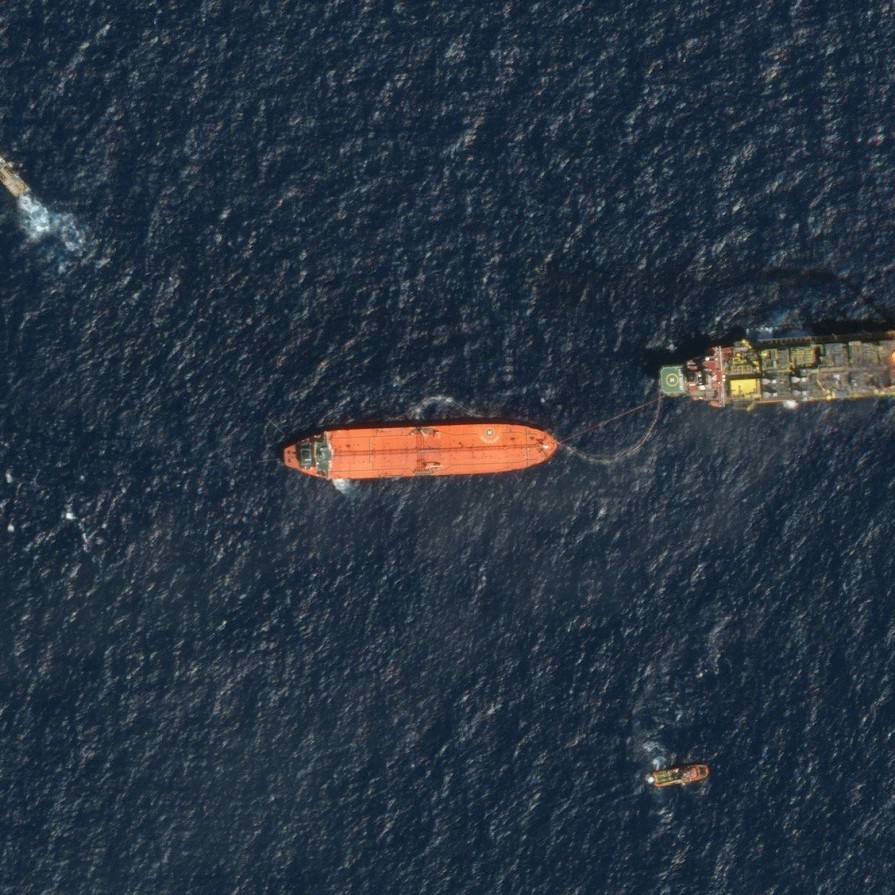
Restoration of Maritime Traffic Through the Strait of Hormuz: Positive Signs from Oil Tankers
In recent hours, an increasing number of oil tankers have begun broadcasting their positions and intentions as they transit through the Strait of Hormuz, indicating a temporary recovery in maritime traffic through this critical chokepoint. Prior to the United States and Iran signing a memorandum of understanding to negotiate a peace agreement, most oil tankers had been moving through and around the Strait of Hormuz in "stealth mode" – that is, with their Automatic Identification System (AIS) tracking equipment turned off.
This stealth mode, previously considered one of Iran's sanction-avoidance tactics, has become common practice in the Persian Gulf, Gulf of Oman, and particularly at the Strait of Hormuz, as ship owners and operators sought to protect their cargoes from potential attacks. These "dark" voyages have complicated the task of market analysts and observers in estimating the degree of supply loss from the Middle East and how much cargo might still be reaching certain buyers through covert movements out of the region.
Increased Broadcasting Signals from Oil Tankers
Since the signing of the memorandum of understanding between the US and Iran, an increasing number of vessels have begun openly broadcasting their positions, according to standard tracking signals monitored by Bloomberg. On the morning of local Tuesday, as many as seven oil tankers were broadcasting that they were in the Strait of Hormuz, including:
- Two very large crude carriers (VLCCs) not flying the Iranian flag moving outward.
- Three product tankers moving outward.
- Two Iranian-flagged Suezmax-sized vessels moving into the Gulf.
While the increased visibility of vessel positions shows a temporary recovery of confidence, ship owners remain cautious before sudden changes in navigational conditions, including conflicting signals from the US and Iran about whether the strait will reopen and where mines need to be cleared.
Shifts in Traffic and Continuing Challenges
A total of 25 visible transits through the Strait of Hormuz were recorded on June 22, including liquefied natural gas (LNG) carriers linked to France and Qatar, according to information from maritime intelligence firm Windward. However, in a sign that carriers are still awaiting full approval, the Indian Oil Corporation (IOC) reportedly failed to charter three vessels to take crude oil and gas from the Persian Gulf and transport these volumes through the Strait of Hormuz, as many ship owners and operators remain extremely cautious about sending vessels to the region.
| Vessel Type | Direction of Movement | Quantity |
|---|---|---|
| VLCCs not flying Iranian flag | Outward | 2 |
| Product tankers | Outward | 3 |
| Iranian-flagged Suezmax vessels | Inward to Gulf | 2 |
Thus, despite positive signs of increased maritime traffic through the Strait of Hormuz, the caution shown by ship owners indicates that the oil market is still facing significant challenges. Political and security factors will continue to play a crucial role in determining the direction of this industry in the future.
Geopolitical Context and Market Implications
The Strait of Hormuz serves as a critical maritime chokepoint through which approximately one-fifth of global oil consumption passes. The recent shift from stealth operations to visible broadcasting represents a potential easing of tensions in the region, though the situation remains fluid. The memorandum of understanding between the US and Iran, while not a formal agreement, has created a diplomatic opening that has translated into increased confidence among some shipping operators.
Market analysts suggest that the resumption of normal shipping patterns could lead to more accurate pricing of oil derivatives and refined products, as the "dark fleet" operations had created significant opacity in supply estimates. The increased visibility of vessel movements allows for better tracking of actual supply volumes and destinations, which could help stabilize markets that have been experiencing volatility due to uncertainty in the region.
Industry Response and Future Outlook
The shipping industry's response to the improved conditions has been mixed, with some operators quickly resuming normal operations while others maintain a wait-and-see approach. This divergence reflects differing risk assessments among industry players, with some having more exposure to the region than others.
Industry experts suggest that a sustained period of stable operations through the Strait of Hormuz would be necessary before confidence is fully restored. The potential for sudden geopolitical shifts, particularly given the complex relationship between the US and Iran, means that many operators will remain cautious despite the recent positive developments.
Looking ahead, the long-term stability of maritime traffic through the Strait of Hormuz will depend on the durability of diplomatic efforts between regional powers and the international community. While the recent increase in visible vessel movements is a positive sign, the underlying geopolitical tensions that led to the "stealth mode" operations in the first place remain largely unresolved.
Conclusion
The resumption of normal maritime operations through the Strait of Hormuz represents a potentially significant development for global oil markets and supply chains. The increased visibility of vessel movements provides much-needed transparency in a region that has been plagued by uncertainty and risk. However, the cautious approach of many shipping operators serves as a reminder that geopolitical tensions can escalate rapidly, and the situation remains fluid.
As the international community continues to monitor developments in the region, the shipping industry will likely maintain a risk-averse approach until more concrete diplomatic progress is achieved. The recent positive developments should be viewed as a potential turning point rather than a definitive resolution to the challenges facing maritime traffic through this critical chokepoint.