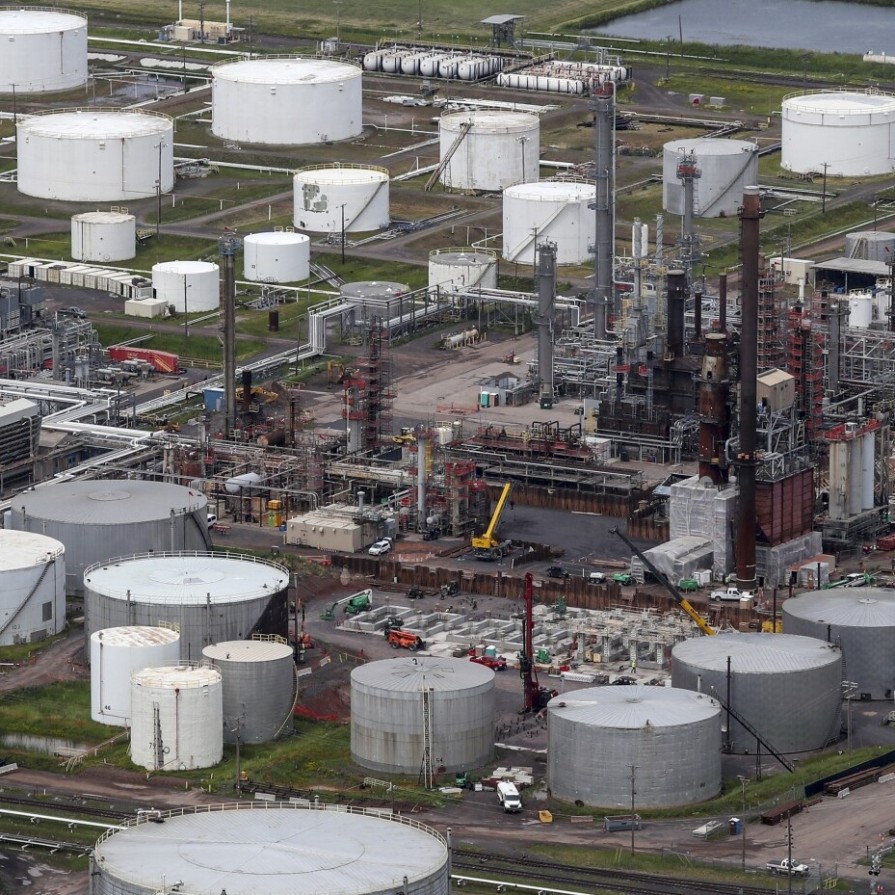
US Crude Oil Reserves Continue Sharp Decline as Strategic Petroleum Faces Critical Shortfalls
The American oil landscape is undergoing significant transformation as crude oil reserves continue their downward trajectory, with the Strategic Petroleum Reserve (SPR) reaching unprecedented lows. According to estimates from the American Petroleum Institute (API), US crude oil inventories decreased by 765,000 barrels in the week ending June 19. This figure, while substantial, represents a notable slowdown compared to the previous week's decline of 8.33 million barrels, suggesting a potential moderation in the rate of inventory depletion.
Despite this apparent deceleration, the underlying trends reveal a complex picture of America's energy security situation. Over the past two months, commercial crude oil inventories (excluding the Strategic Petroleum Reserve) have been rapidly declining, with a total reduction of 53 million barrels over the past ten weeks. However, the overall US crude oil inventory for the year has only decreased by 2.1 million barrels. This apparent contradiction can be attributed to the continuous transfer of oil from the Strategic Petroleum Reserve into the commercial system.
The Strategic Petroleum Reserve: A Depleting National Asset
The slowdown in inventory decline has come at a significant cost. Commercial inventories have been artificially supported by the continuous transfer of barrels from the Strategic Petroleum Reserve into the commercial market. This policy has resulted in the SPR reaching its lowest level in over four decades.
In the week ending June 19, an additional 9.1 million barrels of oil were withdrawn from the SPR, bringing the current total to just 331.2 million barrels. This figure is lower than the 2023 minimum achieved during the Biden administration's large-scale reserve releases and represents the lowest level in more than 40 years. The current SPR inventory stands at 394 million barrels below maximum capacity, raising serious concerns about the nation's ability to respond to future supply disruptions.
Oil Production and Market Dynamics
According to the latest data from the Energy Information Administration (EIA), US oil production has increased to 13.806 million barrels per day in the week ending June 12, up from 13.799 million barrels per day in the previous week and 375,000 barrels per day higher than the same period last year.
Market prices have responded to these complex dynamics. At 4:09 PM ET on Tuesday, prior to the data's release, Brent crude had fallen sharply during the day to $77.10 per barrel (-1.03%), as shipping through the Strait of Hormuz began to resume. West Texas Intermediate (WTI) crude also declined, dropping $0.52 per barrel (-0.70%) to $73.34 per barrel, approximately $3 per barrel lower than the previous week.
Gasoline and Distillate Inventory Trends
In contrast to crude oil, gasoline inventories have increased during this period, rising by 1.238 million barrels in the week ending June 19. This follows a previous week's increase of 2.479 million barrels. According to the latest EIA data, gasoline inventories in the prior week were 6% below the five-year average for this time of year.
Distillate inventories (including diesel and heating oil) have also seen an increase of 1.447 million barrels, following a decrease of 461,000 barrels in the previous week. The latest EIA data indicates that distillate inventories were 13% below the five-year average as of the week ending June 12.
The Critical Cushing Storage Facility
Storage at Cushing, the key delivery hub for WTI crude oil futures contracts, has continued to decline, decreasing by an additional 982,000 barrels in the reported period. This follows a substantial decrease of 1.523 million barrels in the previous week, highlighting ongoing tightness in the physical crude oil market.
| Indicator | Week Ending June 19 | Week Ending June 12 | Change |
|---|---|---|---|
| Crude Oil Inventories (million barrels) | -0.765 | -8.33 | Slowing decline |
| Gasoline Inventories (million barrels) | +1.238 | +2.479 | Increasing |
| Distillate Inventories (million barrels) | +1.447 | -0.461 | Shift from decline to increase |
| Cushing Inventories (million barrels) | -0.982 | -1.523 | Declining but at slower rate |
| US Oil Production (million barrels/day) | 13.806 | 13.799 | Slight increase |
Market Summary: The US crude oil market is experiencing complex and contradictory inventory trends. While commercial crude oil inventories have been declining sharply, the continuous release from the Strategic Petroleum Reserve has partially offset this decline at the national level. However, the sustained use of the SPR has brought this critical national asset to its lowest level in decades. The crude oil market is being influenced by multiple factors, including the resumption of flows through the Strait of Hormuz and varying inventory trends across different petroleum products.
Energy analysts are closely monitoring these developments, as the depletion of the SPR raises concerns about the nation's ability to respond to future supply disruptions. The current situation presents a challenging balancing act between maintaining market stability and preserving this crucial emergency reserve for potential future crises.