#OilPrice #Brent #WTI #Hormuz #OilGas #Energy #LNG #Iran #OPEC #GlobalEconomy
Brent lost nearly 10% in just one week because of ceasefire rumors, is the market being too optimistic about a "geopolitical bomb" that could explode at any time?
The global energy market has just experienced a week of strong fluctuations when oil prices recorded the largest decrease in two months. The main reason comes from the expectation of extending the ceasefire for another 60 days between the US and Iran and the possibility of partially reopening the shipping route through the Strait of Hormuz, a transit point for nearly 20% of the world's oil supply.
It is worth noting that oil prices have dropped sharply even though a series of supply risks are still present from Kazakhstan, Iran, Russia to Brazil.
Energy Price Developments at the Weekend
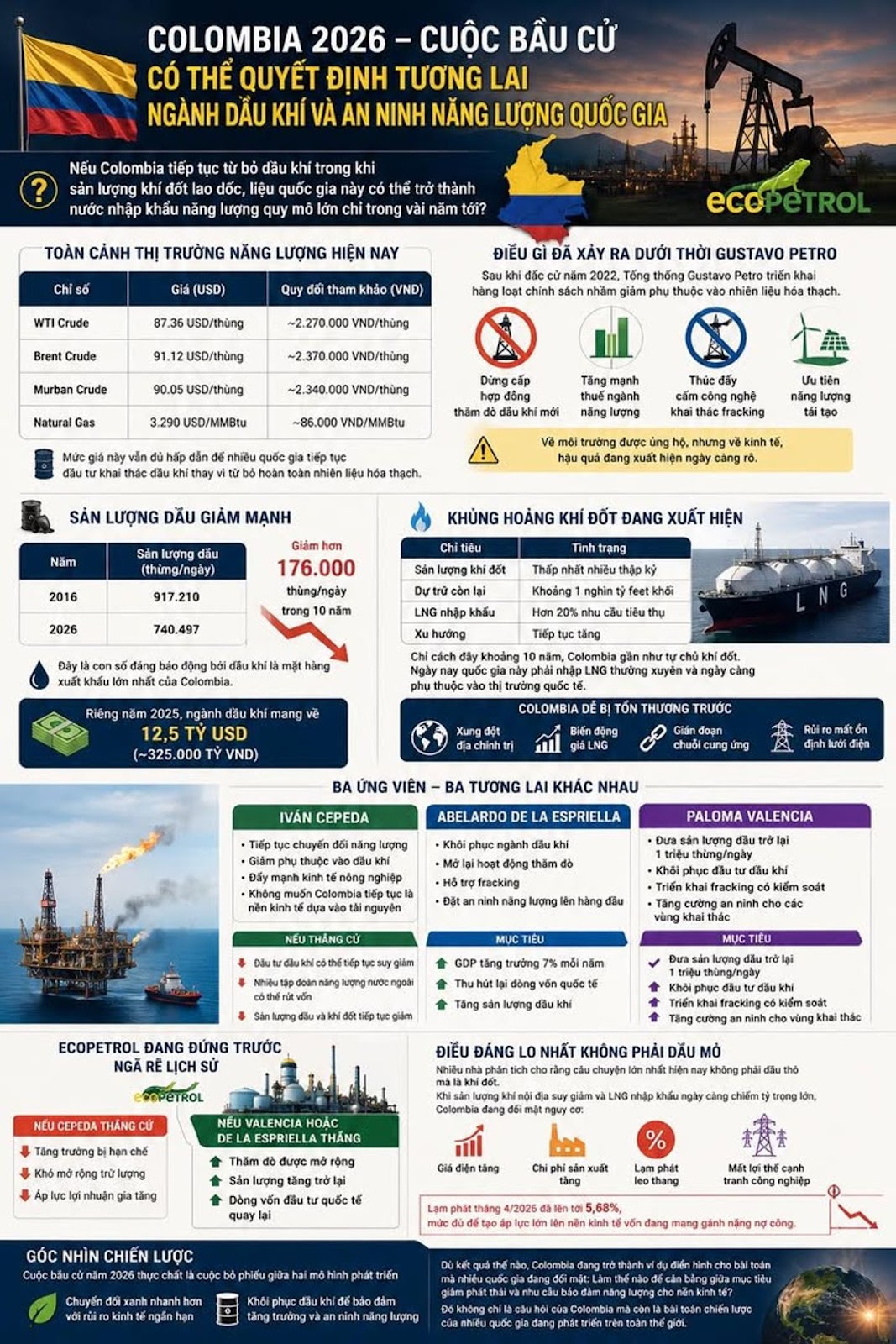
Item Current Price Change
WTI Crude 87.36 USD/barrel -1.73%
Brent Crude 91.12 USD/barrel -1.70%
Murban Crude 90.05 USD/barrel -0.03%
Natural Gas 3.29 USD/MMBtu +0.15%
Brent's nearly 10% decrease this week is the strongest adjustment since the beginning of the second quarter of 2026.
Why Did Oil Prices Fall Sharply?
Three factors are directly impacting market psychology
1. Expectations of peace between the US and Iran
Investors are betting on an extension of the ceasefire for another 60 days.
If the deal is successful
✅ The risk of supply disruption in the Middle East is reduced
✅ Tankers passing through Hormuz are safer
✅ Marine insurance costs cool down
✅ Large importing countries such as Japan and Korea benefit
2. Strait of HormuzThere are signs of reopening
Hormuz is the world's most important oil transport route.
Value Indicator
Oil transported every day ~20 million barrels
Share of global oil trade ~20%
Qatari LNG exports via Hormuz >75%
The return of this route to stable operation caused investors to quickly sell off their oil price speculation positions.
3. Fears of supply shortages are temporarily reduced
For many weeks, the market was worried that oil could exceed 150 USD/barrel.
Currently, Brent is around 91 USD/barrel, making importing countries feel significantly "easier".
But the Risk Has Not Disappeared
Many major events are silently creating upward pressure on prices.
Kazakhstan Encounters Trouble At Giant Tengiz Oil Field
Tengiz mine operated by Chevron Corporation suddenly had an incident.
Indicators Before the incident After the incident
Output 950,000 barrels/day 60,000 barrels/day
A decrease of more than 93%.
This is one of the biggest supply shocks of 2026.
Japan Is Seriously Short of Oil
According to data from the Japanese Ministry of Economy
Target Change
Crude oil imports -66%
The remaining volume is 850,000 barrels/day
Lowest level since 1967
The Middle East supply disruption has put the world's third largest oil importer under unprecedented pressure.
LNG Suddenly Hot Again
While oil prices fell, liquefied natural gas received new support.
️ Korea is preparing to face a prolonged heat wave.
⚡ Power companies have increased purchases of LNG to avoid electricity shortages.
At least 6 LNG shipments have been redirected to Korean ports.
This doescould help Asian LNG prices recover in the short term.
Russia Is Expanding Its Energy Influence
A series of notable moves appeared at the same time
Impact Events
Russia launches Arctic transport route Shortening LNG journey to China
Rosatom builds Kazakhstan's first nuclear power plant Expanding energy influence
Warning to Armenia about gas prices Increasing geopolitical pressure
Moscow is showing that energy continues to be its most important strategic tool.
What Could Happen to Oil Prices?
Positive scenario
Hormuz works normally
The US and Iran extend the ceasefire
Kazakhstan's supply recovered
Brent can fluctuate around 85 - 95 USD/barrel.
Negative scenario
Negotiations broke down
Hormuz continues to be unstable
Iran is subject to stronger sanctions
Widespread supply problems
Brent is completely capable of returning to the area of 120 - 150 USD/barrel as recently warned.
Strategic Perspective
The oil market is sending a very clear message. Oil prices are falling not because the world has a surplus of energy, but mainly because of the period