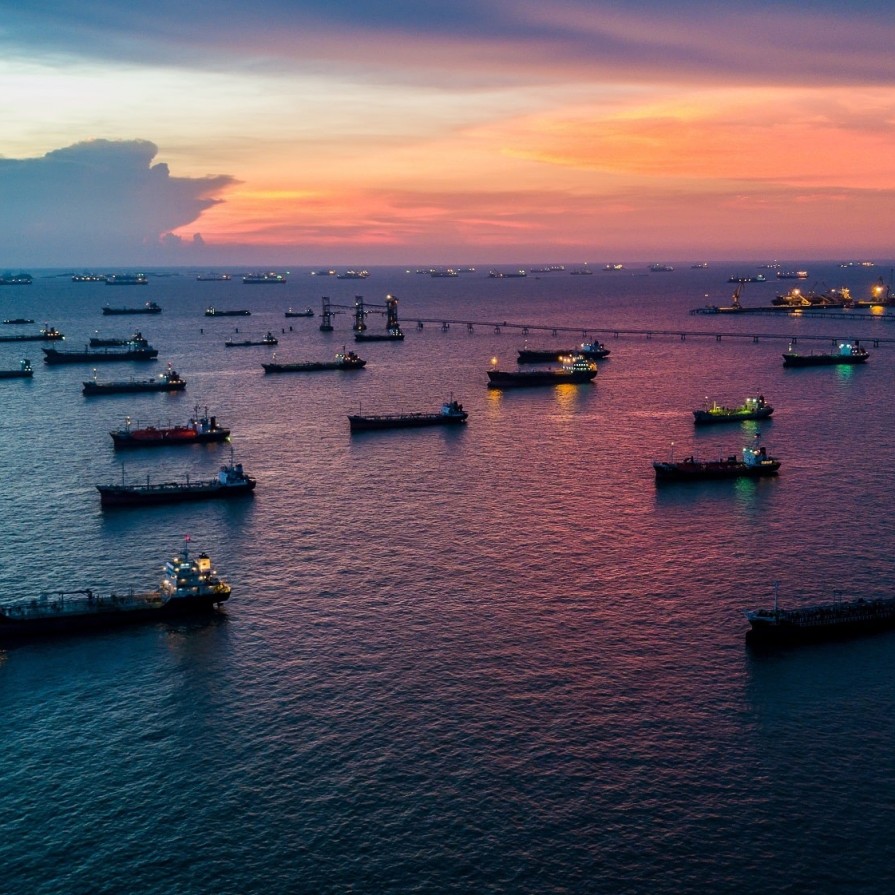
Middle East War Disrupts Global Shipping Industry, Driving Fuel Costs to Record Highs
The ongoing conflict in the Middle East has caused unprecedented disruptions in the global shipping industry, driving up marine fuel costs, altering trade routes, and forcing shipping companies and container cargo customers to adapt to this new reality. The surge in maritime fuel costs has shifted the peak shipping season to spring, before carriers implement additional fuel surcharges in their annual contracts starting July 1st.
Container Exports at Port of Los Angeles Reach Record Levels
The anticipated rise in fuel costs and potential for increased U.S. import tariffs starting July 1st has led to a surge in container import volumes at the Port of Los Angeles, the busiest container port in the United States. In May 2026, the port reported that total loaded imports reached 449,370 TEU (Twenty-foot Equivalent Units), marking a 26% increase compared to the same period last year.
This surge is contrasted by lower import volumes in May 2025, when many shippers paused shipments due to changes in U.S. import policy.
"We're seeing goods move for various reasons, including inventory replenishment, fuel cost concerns, trade policy uncertainty, and preparation for upcoming retail seasons," said Gene Seroka, CEO of the Port of Los Angeles, during this week's press briefing. "Companies are operating with shorter planning horizons and seizing opportunities as they arise."
Marine Fuel Market Experiences Extreme Volatility
The Middle East conflict has disrupted the marine fuel market, causing prices to surge and creating supply shortages in certain regions. Some traders have been forced to skip cargo shipments to carry additional fuel to major bunkering ports outside the Middle East. Shipping operators have implemented emergency surcharges due to sudden fuel price increases.
The shipping giant A.P. Moller - Maersk implemented an Emergency Bunker Surcharge (EBS) starting March 25th, "to address the significant fluctuations in fuel supply and additional distribution costs." Hapag-Lloyd has followed suit by introducing an Emergency Fuel Surcharge (EFS) on all shipping routes, covering special costs not included in the Marine Fuel Recovery Charge (MFR).
Financial Impact on Major Shipping Carriers
Early in May, Maersk CEO Vincent Clerc stated that "the cost impact of this energy shock is unprecedented in terms of scale, speed, and the disruption it creates in the market." For Maersk, the Hormuz energy shock "represents about $500 million in additional costs per month that we have to try to pass on to customers," the executive said during the first-quarter earnings call.
Hapag-Lloyd reported that the conflict and rising energy costs have translated into "significantly higher costs," CEO Rolf Habben Jansen told analysts during the first-quarter earnings call. The additional costs for Hapag-Lloyd amount to 50-60 million euros ($58-70 million) per week, Habben Jansen noted. "Of course, we try to pass on these costs, similar to when you go to a gas station and also have to pay higher fuel prices," the executive added.
| Carrier | New Surcharge | Additional Monthly Cost | Implementation Date |
|---|---|---|---|
| Maersk | Emergency Bunker Surcharge (EBS) | $500 million | March 25, 2026 |
| Hapag-Lloyd | Emergency Fuel Surcharge (EFS) | $58-70 million/week | Early May 2026 |
Fuel Prices Impact Shipping Contracts
Currently, shipping operators will transfer accumulated fuel costs into annual cargo contracts to compensate for rising fuel expenses. The Bunker Adjustment Factor (BAF) is a floating surcharge that carriers use to manage fluctuations in crude oil and marine fuel prices.
Businesses Accelerate Imports to Avoid Cost Increases
In anticipation of these higher fuel surcharges, retailers have moved peak import volumes into May and June to get ahead of the July price hike. Manufacturers and retailers have been trying to ship goods early before July 1st and the higher costs they would have to pay, pushing May import volumes at the busiest container port in the United States to high levels.
Customers are also anticipating the possibility of higher tariffs on certain imported goods by the end of this year. They are also ordering raw materials and goods early amid changing global shipping lanes, with uncertainty remaining high in the Middle East and when the Strait of Hormuz will reopen to safe passage to allow for a normalization of global trade.
The disruptions in the maritime shipping industry serve as a clear example of how geopolitical conflicts can impact global supply chains, forcing businesses to continuously adjust their business strategies amidst constant fluctuations.