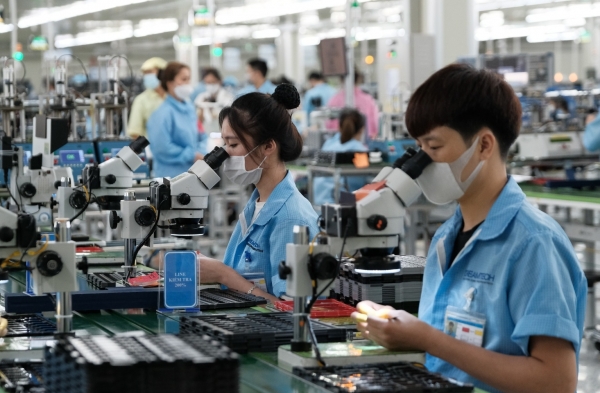
Proposal to Increase Minimum Wage to 9.8 Million VND by 2027
The Vietnam General Confederation of Labor has recently submitted two proposals for adjusting the regional minimum wage for 2027, with significant increases ranging from 8.5 to 9.8 million VND. This important proposal aims to improve the living standards of workers amid an economy facing numerous fluctuations.
Details of the Two Proposed Options
According to the Vietnam General Confederation of Labor, the two proposed options for adjusting the regional minimum wage for 2027 have been developed based on analysis of the socio-economic situation and the payment capacity of businesses:
- Option 1: Increase the regional minimum wage by 6% to 8% compared to current levels
- Option 2: Increase the regional minimum wage by 8% to 10% compared to current levels
Specifically, if Option 2 is applied, the regional minimum wage could reach from 8.5 million VND to 9.8 million VND/month, depending on each region.
Comparison of Current and Proposed 2027 Regional Minimum Wage
| Region | Current Wage (2024) | Proposed Wage (Option 1) | Proposed Wage (Option 2) |
|---|---|---|---|
| Region I | 7.29 million VND | 7.73 - 7.86 million VND | 7.87 - 8.02 million VND |
| Region II | 6.48 million VND | 6.87 - 6.99 million VND | 7.00 - 7.10 million VND |
| Region III | 5.65 million VND | 5.99 - 6.10 million VND | 6.10 - 6.22 million VND |
| Region IV | 4.99 million VND | 5.29 - 5.39 million VND | 5.39 - 5.49 million VND |
Background and Rationale for the Proposal
The annual adjustment of regional minimum wage is a legal requirement, implemented based on the socio-economic development situation and the payment capacity of businesses. The Vietnam General Confederation of Labor stated that this proposal is based on the following factors:
- Inflation in 2024 is forecast at 3.5-4%
- 2024 GDP growth is expected to reach approximately 6.5%
- The payment capacity of businesses has recovered after the COVID-19 pandemic
- Workers still face pressure from rising prices and living costs
Economic and Social Impacts of Wage Increases
Increasing the regional minimum wage will create multidimensional impacts on the economy and society:
Positive Impacts:
- For workers: Improving income, enhancing living standards, increasing work motivation
- For businesses: Attracting and retaining talent, increasing labor productivity, reducing turnover rates
- For the economy: Increasing purchasing power, promoting domestic consumption, stimulating economic growth
Potential Impacts:
- Increased production costs, potentially affecting business competitiveness
- Risk of increased inflation due to rising labor costs
- For small and medium enterprises, financial pressure may increase
Impact Analysis by Industry Sector
| Industry Sector | Impact Level | Adaptation Capacity | Notes |
|---|---|---|---|
| Textiles, footwear | High | Medium | Often has low profit margins, heavily dependent on cheap labor |
| Food processing | Medium | High | Essential products, stable demand |
| Construction | Medium | Medium | Depends on project scale and cost management capability |
| Services | Low | High | Focuses on value-added rather than cheap labor |
| High-tech | Low | Very High | Mainly uses high-skilled labor |
Opinions from Stakeholders
The increase in regional minimum wage always receives mixed opinions from stakeholders:
From Workers:
- Agree with wage increases to improve living standards
- Hope for higher increases to compensate for inflation
- Concern about price increases if businesses pass costs to consumers
From Businesses:
- Large businesses generally support moderate wage increases to stabilize society
- Small and medium enterprises are concerned about financial pressure
- Many businesses propose region-specific wage increases, aligned with actual labor productivity
From Economic Experts:
- Recommend wage increases in line with labor productivity and economic competitiveness
- Propose combining wage increases with support policies for small and medium enterprises
- Note the impact on inflation and foreign investment attraction
Conclusion and Outlook
The adjustment of regional minimum wage for 2027 is an important decision affecting the lives of millions of workers and business operations nationwide. The two proposals from the Vietnam General Confederation of Labor reflect a balance between the need to improve workers' living standards and the payment capacity of businesses.
The Government and related agencies will carefully consider these proposals, combined with opinions from stakeholders, before making a final decision. Regardless of the specific increase amount, adjusting the regional minimum wage remains one of the important policies to ensure social equity and sustainable development.
In the context of Vietnam's continued economic recovery and deeper integration, building a fair and efficient labor market is a key factor to ensure inclusive growth and improve the quality of the national human resources.