Oil Prices Plummet: Iran Conflict Continues Despite Market "Half-Open"
Brent crude has fallen more than 20% over the past month, dropping from triple-digit figures during the period of heightened tensions with Iran to around $72 per barrel currently. WTI is also trading near the $70 level. Such a steep decline typically signals one thing - the crisis is over. But the reality is not quite so simple.
The Hormuz Strait: A "Half-Open" Bottleneck
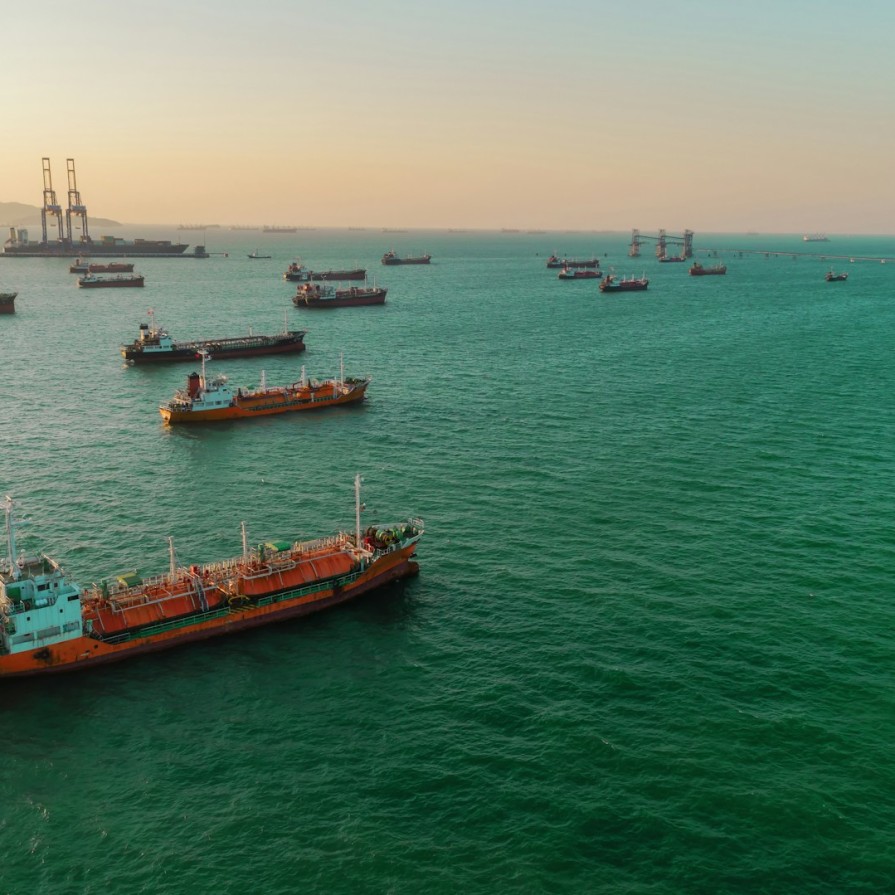
The Hormuz Strait - the vital maritime artery transporting about one-fifth of the world's seaborne crude oil - has been nearly closed for nearly four months after the U.S. and Israel attacked Iran on February 28. Iran had mined the strait, attacked tankers, and shut down the route to any vessels deemed hostile.
On June 17, the U.S. and Iran signed a preliminary memorandum of understanding to reopen Hormuz to free navigation and de-escalate the war within 60 days. However, this process has not been smooth. Iran had closed the strait again in April over what it called ceasefire violations. Even between June 25-26, Iran and the U.S. exchanged新一轮 attacks - drones attacked a container ship, the U.S. retaliated, and Tehran fired on a Qatari tanker before both sides agreed to pause new negotiations in Doha.
Maritime shipping is still operating under a daily quota system administered by Iran's Islamic Revolutionary Guard Corps Navy, hundreds of vessels remain stranded in the Gulf, and war risk insurance premiums remain many times higher than pre-war levels.
| Hormuz Situation Statistics | Pre-war | Current |
|---|---|---|
| Oil flow from Gulf region | 100% | ~75% |
| Vessels stranded in Gulf | Few | Hundreds |
| War risk insurance premiums | Base level | Many times higher |
Saudi Arabia and Gulf States Increase Production
Saudi Arabia has begun loading oil onto tankers at Ras Tanura, and the UAE, Kuwait, and Qatar are all pushing more crude oil into the sea. Oil flows from the Gulf region are reported to have rebounded to about 75% of pre-war levels. This has been enough to send oil prices plummeting and disrupt calculations for most energy stocks related to the Middle East, even as the underlying conflict continues.
The combination of falling prices, still fragile peace, and the region's rush to restore production has created a strange set of winners. Some major oil companies have suffered real losses from the war but are still betting on a perfect recovery. Others have profited from the chaos itself and now must prove they can keep the money as the chaos dissipates.
1. ExxonMobil (NYSE: XOM)
Two of ExxonMobil's LNG vessels in Qatar, related to the company's stake in the North Field, were damaged during combat in the first quarter, a detail that didn't appear on the stock price chart but in the footnotes of the earnings call. CEO Darren Woods said the lost capacity, about 3% of last year's upstream production, could take up to five years to fully repair. This is a major reason why Exxon's net income fell to $4.2 billion in the first quarter, the lowest in five years, with $706 million in losses directly related to war hedging and an additional $3.9 billion in derivative timing effects.
That didn't prevent Exxon from beating expectations on an adjusted basis - $1.16 per share versus the near-market forecast of $1.01, beating by more than 15%. The reason is quite simple. Exxon's biggest growth driver never touched Hormuz. Permian production is heading toward 1.8 million barrels of oil equivalent this year, and Guyana just surpassed the 900,000 barrels per day mark. Add to that a $20 billion buyback plan for 2026, a dividend increase to $1.03 per share, and an upgrade from Bank of America to buy on June 15, and you have a stock that has regained its footing even with the "wounds" in Qatar.
The stock trades around $137, still far from the high of $176.41 reached in March before the full costs of the war were priced in. There's also a political factor unrelated to Hormuz - Trump accused Exxon of price gouging consumers at the pump and ordered the Justice Department to investigate. This could be seen as a slower recovery trade rather than a peace trade.
2. Halliburton (NYSE: HAL)
Halliburton trades around $34. Citi's price target is $52. That gap nearly tells the entire investment thesis.
The first quarter showed why both numbers exist. Middle East and Asia revenue fell 13% year-over-year to $1.3 billion as the war impacted drilling operations in Saudi Arabia, Qatar, the UAE, Iraq, and Kuwait, costing the company about 2-3 cents per share. However, adjusted EPS of 55 cents still beat the 50-cent forecast, and operating revenue jumped 56% to $679 million, with CEO Jeff Miller calling North America's recovery still in "early innings."
What hasn't happened is the actual recovery in Gulf drilling operations. Saudi Arabia, Qatar, and Iraq remain below pre-war levels, and Halliburton has held onto its personnel and equipment throughout the conflict rather than pulling out, a decision that one Melius Research analyst said has positioned the company to meet demand when it returns. The stock is still down 14% in the past month. Either the market doesn't believe the recovery will happen soon, or the stock simply ran too far too fast and is now retracing.
3. Frontline plc (NYSE: FRO)
Frontline hit a 12-month high on June 24 and closed down 5% that same day. Two days later, it fell another 6%. That volatility says a lot about what this stock really is.
The world's largest VLCC operator made a fortune from the closure of the Hormuz Strait, not from its reopening. Longer voyages, rerouted cargoes, and general chaos in crude oil trading patterns pushed VLCC spot rates above $100,000 per day and brought Frontline's adjusted earnings to $344.9 million in the first quarter, the company's best results since 2004. Frontline paid out nearly dollar-for-dollar of adjusted earnings per share in dividends, so the payout also increased about 50% to $1.55 per share.
Now, what made this stock is being unwound. BTIG raised its price target to $55 from $45 on June 24, arguing that the reopening sets up the largest crude oil replenishment cycle the tanker market has ever seen as Gulf countries finally move the oil they've held for months. Evercore, Danske Bank, and Pareto don't see it that way; all three have downgraded the stock to Hold in recent months, betting that simple rates will revert as the disruptions that created them disappear. Frontline CEO Lars Barstad has said the tanker market tends to do well on instability, which is a fairly accurate description of the past four months, and an open question about the next four.
4. Valero Energy (NYSE: VLO)
Valero doesn't need this list. The stock hit an all-time high of $265.61 on June 3 and still trades near $259, comfortably above where it traded before the war began.
First quarter EPS of $4.22 beat the $3.16 forecast. Refining margins per barrel rose to $16.06 from $9.56 a year ago thanks to unusual crude oil differentials and a surge in crack spreads; ultra-low-sulfur diesel margins versus Brent more than doubled, to $27.60 per barrel from $16.69. Part of that has nothing to do with Iran - an explosion in March damaged Valero's 380,000 barrels per day Port Arthur refinery, which has only partially restarted, and U.S. refining capacity is tight enough on its own to prevent these crack spreads from collapsing just because a war ends. Part is characteristic of Hormuz - jet fuel exports dropped sharply during the closure and are now rebounding as the strait reopens, a trend that directly plays into Valero's export operations.
Wall Street continues to raise targets through the noise, Mizuho to $289, Citi to $259, though Wolfe Research is the exception with an Underperform call and $203 target based on a bet that these spreads can't hold. Either way works for Valero. The company makes money if peace is maintained, and the company was already making money before the peace process even began.
5. KBR, Inc. (NYSE: KBR)
KBR has nothing to do with tankers, drilling-richness, or crack spreads. This is a bet on what gets rebuilt after the shooting stops.
The Houston-based engineering and services contractor has quietly built a real position in Iraqi energy infrastructure over the past few years - managing the integrated field for Basra Oil's giant Majnoon, detailed engineering on the AGUP2 project with TotalEnergies and QatarEnergy, a consulting contract with Iraq's Planning Ministry, and in recent weeks, winning detailed engineering on an offshore Qatar project. The upside thesis rests on the $300 billion in reconstruction funding for the region that the U.S. pledged in the Islamabad memorandum, money aimed at the broader region rather than specifically Iraq, but the kind of pipeline that existing relationships position KBR to win.
None of that shows up in the numbers even. First-quarter revenue fell 5% to $1.9 billion due to the planned removal of European military work, though adjusted EPS of 96 cents beat expectations, and management says they haven't seen Middle Eastern customers cut capital spending despite the war.
The stock has been priced for trouble rather than opportunity, falling about a third over the past year to around $32, compared to analyst targets still mostly sitting at $40-50 after a series of recent target cuts. KBR is also mid-separation, planning to spin off its Mission Technology Solutions unit separately before January 2027, adding its own complexity to the story. This is the smallest, riskiest pick in the list - a name that only wins if reconstruction money actually shows up in contracts, not just in the fine print of a memorandum.
Conclusion
While oil prices have fallen sharply and the Hormuz Strait is considered "half-open," the Iran conflict continues with fragile ceasefires. Energy companies are in a transitional state - some are recovering from losses, others are trying to hold on to profits from the chaos. The market is repricing forecasts in this new context, creating both opportunities and risks for investors.