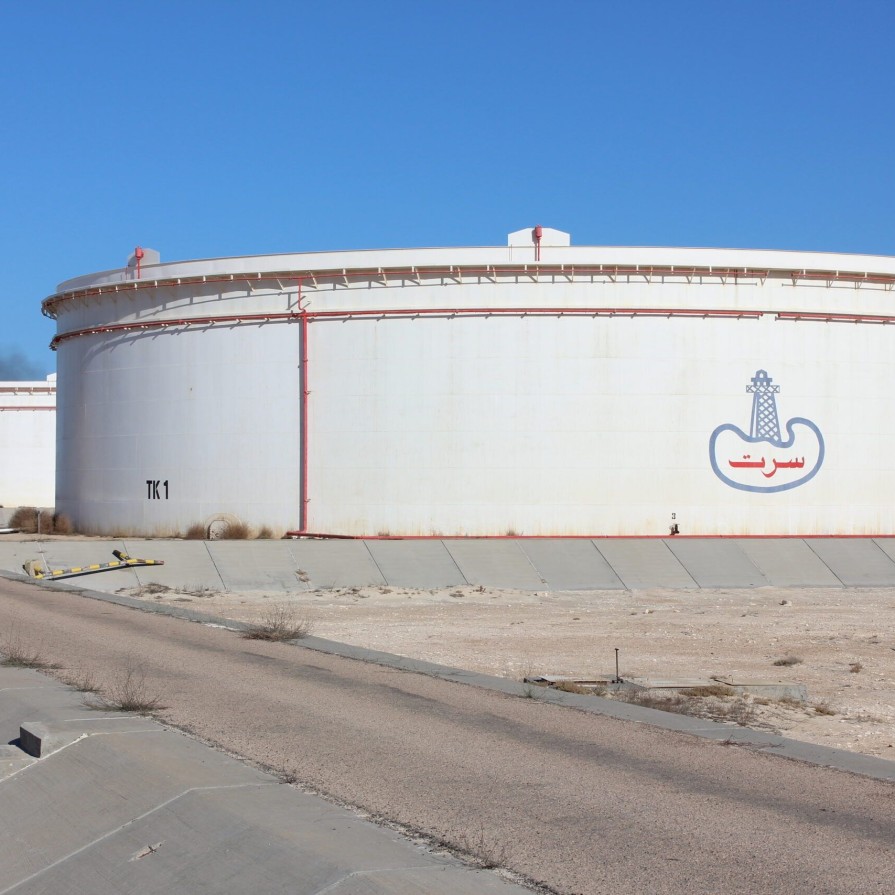
Libya Boosts Oil Production as OPEC Forecasts 18% Global Demand Growth Through 2050
In the context of complex fluctuations in the global energy market, Libya has announced that its crude oil production has reached a 13-year high, while the OPEC organization has revised its long-term oil demand forecast upward to a record level. These parallel developments indicate that the oil industry is facing multidirectional trends, characterized by both growth and challenges.
Libya's Oil Production Reaches 13-Year Peak
The National Oil Corporation of Libya (NOC) has announced that current crude oil production has reached 1.487 million barrels per day (bpd), just a small gap from the NOC's short-term target of 1.5 million bpd. This production level paves the way for achieving the long-term strategic target of 2.1 million bpd within the next 3-5 years.
This growth comes as Western companies are actively seeking new oil and gas supplies worldwide to compensate for energy losses resulting from export sanctions against Russia following the outbreak of the Ukraine conflict on February 24, 2022.
OPEC Revises Long-Term Oil Demand Forecast Upward
Simultaneously, the Organization of the Petroleum Exporting Countries (OPEC) has raised its long-term oil demand forecast for the third consecutive time. According to its latest report, the organization forecasts global oil demand will increase by an additional 19 million barrels per day (equivalent to 18%) by 2050.
The primary driver behind OPEC's increased long-term demand forecast is that governments worldwide are increasingly prioritizing energy security over rapid transition away from fossil fuels. This trend is also a significant factor driving increased foreign investment and oil development in Libya, particularly from Western companies.
Libya's Geological Potential and Oil Production History
Geologically, there are no obstacles preventing Libya from achieving higher oil production levels. The country possesses proven crude oil reserves of approximately 48 billion barrels - the largest in Africa. Before Muammar Gaddafi was ousted in 2011, Libya had no difficulty maintaining production of around 1.65 million bpd of high-quality, light, sweet crude oil.
Key crude varieties like Es Sider and Sharara are particularly favored in the Mediterranean and Northwestern Europe due to their high gasoline and intermediate distillate content. Libya's oil production has also shown a stable upward trend, from around 1.4 million bpd in 2000, though still far from the more than 3 million bpd achieved in the late 1960s.
Foreign Investment and New Projects
Western companies' interest in new upstream projects in Libya shows no signs of waning. Late in 2021, Libya's Government of National Unity (GNU) approved the sale of 8.16% stake in the massive Waha oil interests held by US-based Hess Corporation to the remaining shareholders. France's TotalEnergies (16.3%) and ConocoPhillips (16.3%) were each offered to purchase half of Hess's stake.
Early in 2022, Shell also expressed interest in returning to Libya after senior company representatives met with NOC Chairman Mustafa Sanalla during a visit to Tripoli. Shell had ceased operations in Libya in 2012, partly due to contractual terms but mainly due to deteriorating security conditions following Gaddafi's ouster.
Western companies continue to invest heavily in Libya's oil sector:
- TotalEnergies: Committed to increasing oil production from the Waha, Sharara, Mabruk, and Al Jurf fields by at least 175,000 bpd and prioritizing development of the Waha-concession North Gialo and NC-98 fields.
- Eni (Italy): Announced new gas discoveries offshore near the Bahr Essalam field (Libya's largest offshore gas field), with initial estimates of over 1 trillion cubic feet (Tcf) of gas.
- BP (UK): Collaborating with Eni in the Matsola exploration area in the Sirte basin, signing a memorandum of understanding to evaluate options for redeveloping the massive onshore Sarir and Messla fields.
- KBR (US): Awarded a contract to provide project management and engineering services for the South Refining Project (SRP) at Ubari, southwestern Libya.
Political Challenges and Risk of Oil Blockades
However, Libya still faces significant political challenges. By mid-June 2022, another oil blockade of Libya had begun, as key elements of the important peace agreement negotiated on September 18, 2020 to end the previous blockade had not been implemented.
Libyan National Army (LNA) Commander Khalifa Haftar has clarified to the opposing side (the UN-recognized Government of National Accord in Tripoli) that this is only a temporary arrangement while seeking long-term solutions for oil revenue distribution.
On April 11 of this year, rival factions passed the 2026 national budget with a total value of 190 billion LYD (29.6 billion USD). The budget framework also allocates 12 billion LYD separately to NOC to ensure production and energy stability. However, many factions view this as a division orchestrated by the elite leadership, against democracy.
| Political Challenges in Libya | Impact on Oil Industry |
|---|---|
| Independent military and civilian councils in western Tripoli, Misrata, and Zawiya | View the budget as the financial basis for a US-mediated political track, leaving Abdul Hamid Dbeibah as Prime Minister and elevating Saddam Haftar (son of Khalifa Haftar) to presidency |
| Major institutions within the western regional management structure | Formally reject the political arrangements behind the budget, arguing that the agreement bypassed the UN-led peace process |
| Libya's Grand Mufti, Sheikh Sadiq al-Gharyani | Strongly opposes the budget, considering it "handing over all power" to Khalifa Haftar and his sons |
| Multiple factions | Argue that instead of fixing state corruption, the budget has institutionalized it into a better-organized and more clearly coordinated framework for theft |
Future Outlook
Despite the political context potentially leading to oil blockades in the future, Western countries and their companies do not seem discouraged. A senior source working closely with the European Union's energy security structure shared with OilPrice.com: "There is a fundamental view that Libya has been in trouble since 2011 and may continue to be, but at some point it could resolve itself, and there are not many [oil and gas] options of that scale available."
The confidence of Western companies is reflected in long-term projects such as Eni conducting deep-sea drilling - requiring long-term capital and security guarantees. BP is also collaborating with Eni in the Matsola exploration area in the Sirte basin, with commitments to drill an additional 16 wells in Libya both onshore and offshore.
TotalEnergies has also recently announced the resumption of production at Libya's Mabruk oil field, demonstrating "the company's long-term commitment to Libya."
While political challenges persist, Libya's abundant geological potential and strong investment interest from international energy companies are shaping a promising future for Libya's oil industry in the context of global oil demand expected to continue growing in the coming decades.