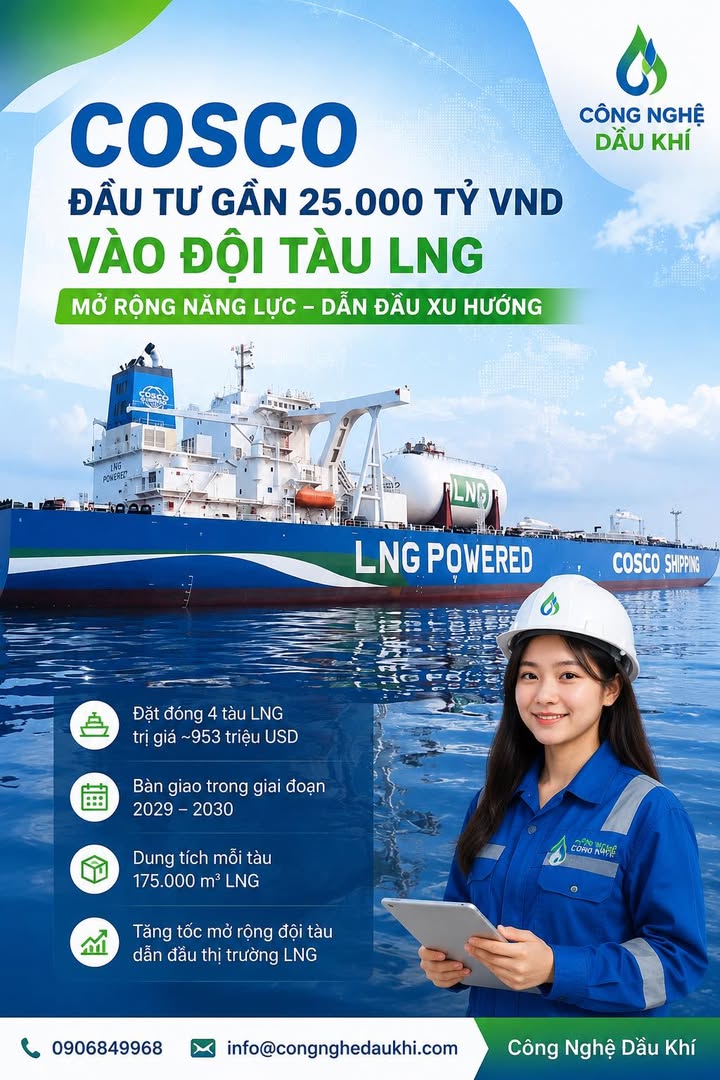
COSCO Makes $953 Million Bet on LNG Fleet Expansion for Global Energy Future
While global energy markets remain uncertain, Chinese shipping giants are making massive investments in liquefied natural gas (LNG) transportation that suggest they foresee a major energy cycle that much of the market has yet to recognize.
On June 2, 2026, COSCO Shipping Energy, through its subsidiary Future Ocean LNG Investment, formally signed a contract with Jiangnan Shipyard to construct four new LNG carriers with a capacity of 175,000 cubic meters each. The total contract value reached approximately $953 million, equivalent to about 24.780 trillion VND at current exchange rates. The vessels are expected to be delivered between 2029 and 2030.
This is not merely a new shipbuilding contract but a strategic move indicating COSCO's strong confidence in the long-term growth of the global LNG market.
Contract Details and Investment Scale
| Parameter | Value |
|---|---|
| Number of vessels | 4 |
| Capacity per vessel | 175,000 m³ |
| Total investment | $953 million |
| VND equivalent | Approximately 24.780 trillion VND |
| Delivery timeline | 2029 - 2030 |
| Shipyard | Jiangnan Shipyard |
According to sources from COSCO, this investment aims to expand LNG transportation capabilities, optimize the fleet structure, and enhance international operational capabilities in the context of continuously increasing global LNG demand.
Why COSCO is Making a Major Bet on LNG
For many years, COSCO Shipping Energy has been renowned for having one of the world's largest fleets of crude oil and petroleum product carriers. However, the energy transition is making LNG one of the most attractive growth sectors.
Asian countries such as China, Japan, South Korea, and India continue to increase LNG imports to reduce dependence on coal and enhance energy security. Meanwhile, Europe, following the energy crisis, has also strengthened LNG imports from the United States, Qatar, and other new supply sources.
Consequently, demand for LNG vessels remains high, and new orders continue to appear at major shipyards in China and South Korea.
The Scale of COSCO's LNG Fleet
| Status | Number of Vessels |
|---|---|
| In operation | 65 |
| Under construction | 22 |
| Total | 87 |
These figures show that LNG has become one of COSCO's strategic business segments rather than just a supplementary sector.
Shell Behind the Billion-Dollar Deal
A noteworthy point is that after delivery, the four new LNG vessels will be operated under long-term charter contracts with Shell Tankers Singapore.
The total value of the charter contract over the 7-year term is estimated at approximately $799 million, equivalent to more than 20.700 trillion VND. This helps COSCO significantly reduce market risks right from the project's planning stage.
Jiangnan Shipyard Emerges as a New LNG Powerhouse
Jiangnan Shipyard is rapidly emerging as one of China's fastest-growing LNG shipbuilders.
Since early 2026 alone, the shipyard has received several large LNG orders from international shipowners. The contract with COSCO further consolidates Jiangnan's position in competition with leading names like Hyundai Heavy Industries, Hanwha Ocean, and Samsung Heavy Industries of South Korea.
What's Happening in the Global LNG Market
- US LNG exports continue to increase
- Qatar is rapidly expanding gas extraction capacity
- China is increasing long-term LNG imports
- Europe continues to diversify gas supply sources
- Numerous new LNG projects are being approved worldwide
These factors are creating substantial demand for LNG transport vessels over the next decade.
Implications for Vietnam
Vietnam is implementing numerous LNG power projects in Bac Lieu, Long An, Hai Phong, Quang Ninh, Ninh Thuan, and other localities. As LNG import demand increases, the Asian regional LNG shipping market will become increasingly active.
The fact that corporations like COSCO are continuously investing tens of trillions of VND in LNG fleets suggests they are preparing for a long-term growth phase in the global liquefied gas industry rather than focusing only on short-term demand.
Conclusion: A Strategic Bet on the Energy Transition
COSCO's substantial investment in LNG carriers reflects a broader trend in the maritime industry's response to global energy transition. As nations worldwide seek to reduce carbon emissions while maintaining energy security, LNG has emerged as a critical bridge fuel in the transition toward cleaner energy sources.
The strategic partnerships with industry leaders like Shell and investments in advanced shipbuilding capabilities position COSCO to capitalize on the anticipated growth in LNG transportation for years to come.
For Vietnam and other rapidly developing economies, these developments signal both opportunities and challenges in securing reliable energy supplies while participating in the evolving global energy landscape.