#LNG #Hormuz #Gas #Oil #Qatar #UAE #Iran #USA #Energy #Reuters #ING #TimKiemTop
Is the world focusing too much on oil prices and ignoring the gas crisis that could be even more serious?
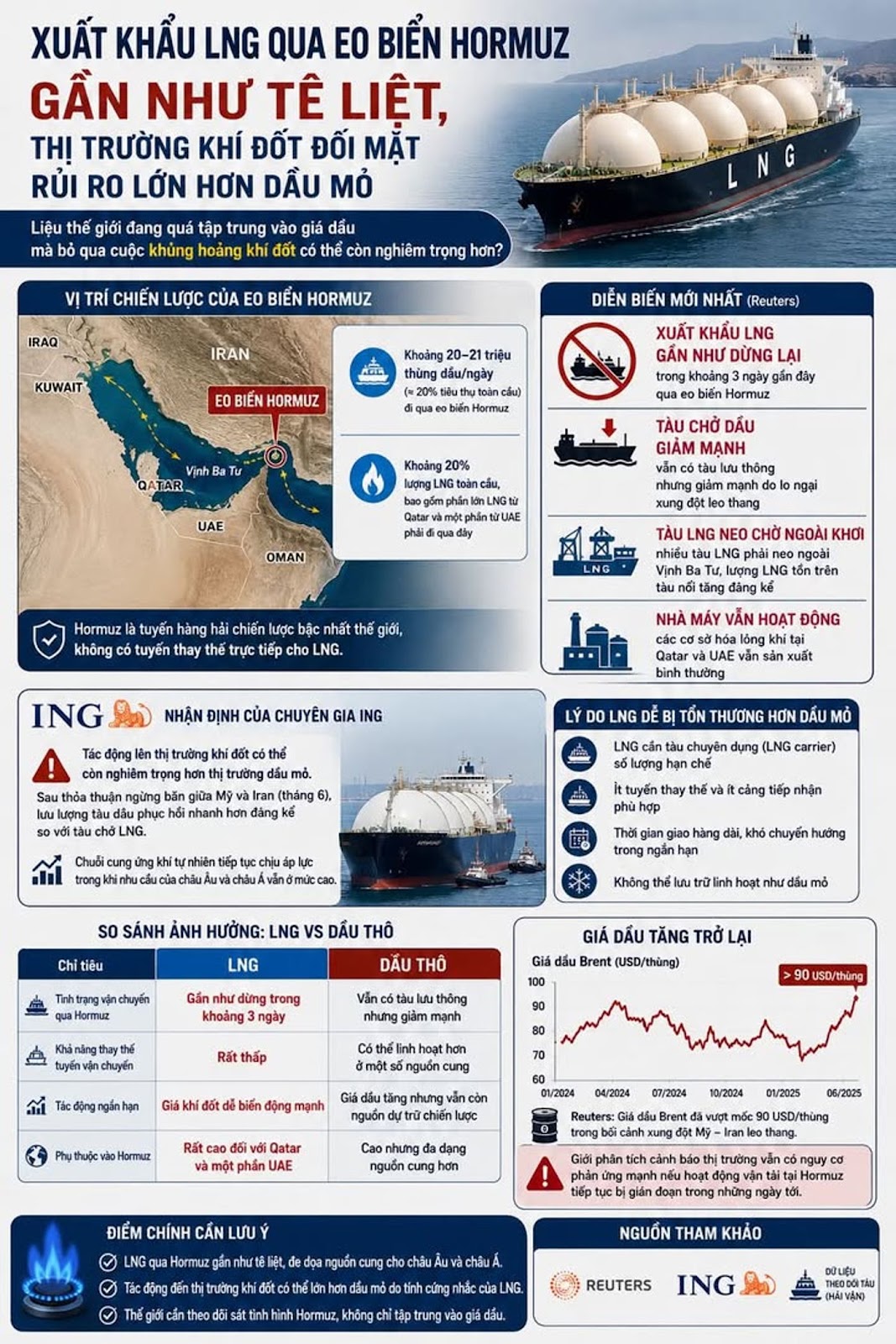
LNG exports through the Strait of Hormuz have almost stopped in the last three days, according to ship tracking data from maritime analytics companies cited by Reuters. Meanwhile, oil tanker traffic also decreased sharply when shipping companies limited sending ships through the area due to concerns about escalating conflicts.
According to ING experts, the impact on the gas market could be even more serious than the oil market. The reason is that after the ceasefire agreement between the US and Iran in June, oil tanker traffic recovered significantly faster than LNG tanker traffic. This causes the natural gas supply chain to continue to be under pressure while European and Asian demand remains high.
Although gas liquefaction facilities in Qatar and the UAE continued to produce, many LNG ships had to wait offshore instead of leaving the Persian Gulf. Reuters said the amount of LNG stored on floating ships has increased significantly, reflecting the situationThe goods are available but cannot be shipped to customers on schedule.
LNG Crude Oil Target
Transport situation through Hormuz Almost stopped for about 3 days There is still train traffic but it has decreased sharply
The possibility of shipping route substitution Very low There could be more flexibility in some supply sources
Short-term impact Gas prices are susceptible to strong fluctuations Oil prices increase but there are still strategic reserves
Dependence on Hormuz Very High for Qatar and parts of UAE High but more diverse in supply
Hormuz is the world's most strategic maritime route. Most of Qatar's LNG and some output from the UAE must pass through the strait before reaching major consumer markets in Europe and Asia. When circulation is disrupted, actual supply on the international market will decrease even though factories still operate normally.
A notable point is that the oil market still has factors that help reduce shocks such as strategic reserves, output from many other regions and the ability to adjust supply. Meanwhile, LNG relies heavily on specialized fleets and receiving ports, making it significantly more difficult to change routes or transfer supplies.
The new developments also caused world oil prices to increase again. Reuters reports oil pricesBrent has surpassed the 90 USD mark per barrel in the context of the US-Iran conflict continuing to escalate, and analysts warn that the market is still at risk of a strong reaction if transportation activities at Hormuz continue to be disrupted in the coming days.