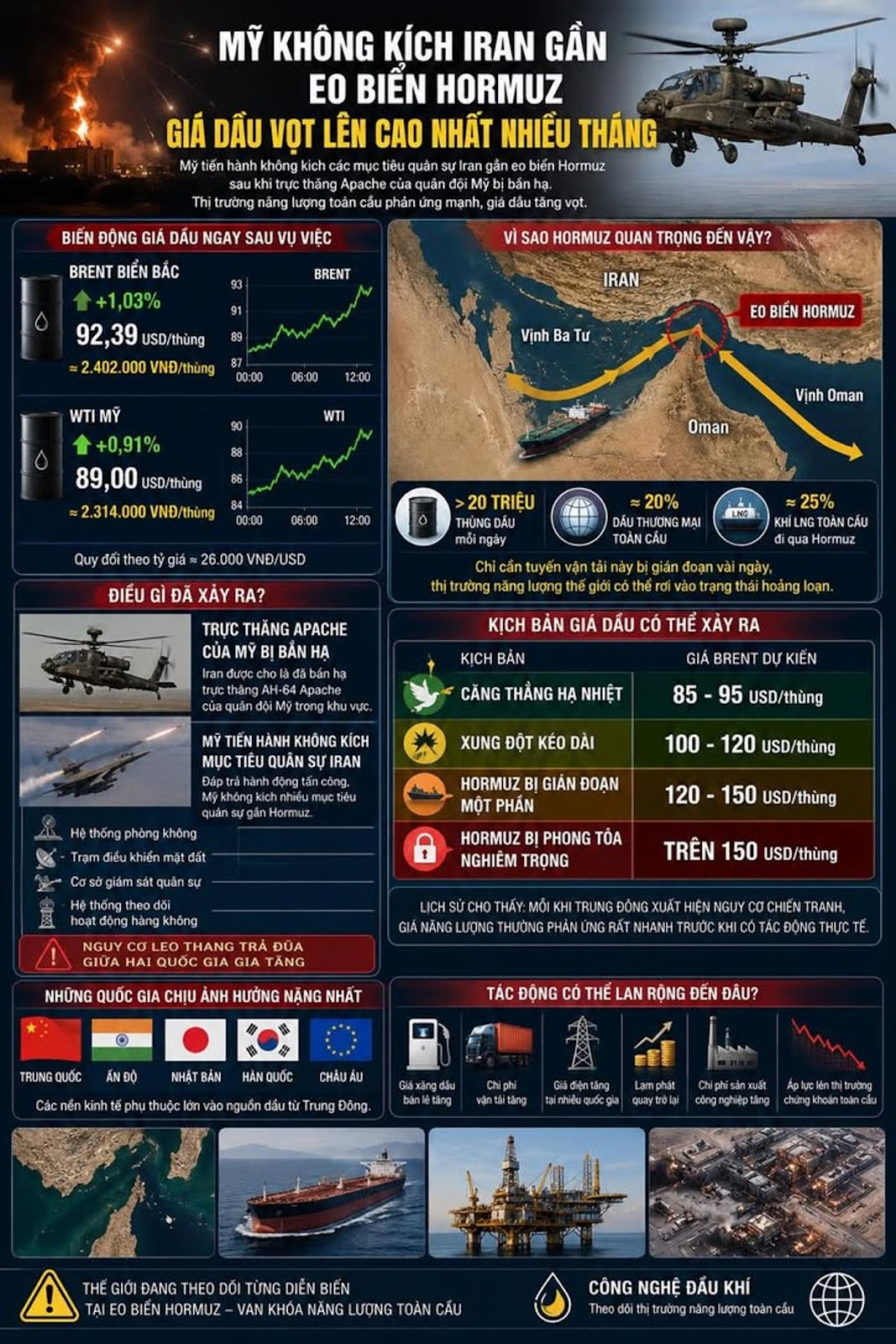
US Military Strikes Near Strait of Hormuz Trigger Sharp Rise in Oil Prices
The global energy market experienced significant volatility following US military strikes against Iranian military targets near the strategically vital Strait of Hormuz. The incident has raised concerns about potential escalation in the Middle East and its impact on global oil supplies and prices.
Geopolitical Tensions Escalate
According to US Central Command, the military strikes were conducted in response to Iran's downing of an Apache helicopter operating in the region. The targeted Iranian military installations included:
- Air defense systems
- Ground control stations
- Military surveillance facilities
- Aircraft tracking systems
What concerns investors most is not the scale of the current strikes but the potential for escalating retaliation between the two nations, which could disrupt global energy supplies.
Immediate Impact on Oil Prices
The market reacted swiftly to the news, with oil prices surging in Asian trading sessions. The following table shows the current pricing for major oil benchmarks:
| Oil Type | Current Price |
|---|---|
| Brent North Sea | Approximately $92.38/barrel |
| WTI US | Approximately $89.00/barrel |
While this price increase represents significant movement, it is not yet at the levels seen during major historical oil shocks. However, it demonstrates that investors are beginning to price in the risk of war in the Middle East.
The Critical Importance of the Strait of Hormuz
The Strait of Hormuz, located between Iran and Oman, represents one of the most strategic chokepoints for global energy transportation. Its importance cannot be overstated:
| Metric | Volume/Percentage |
|---|---|
| Daily oil transit | Over 20 million barrels |
| Global commercial oil trade | Approximately 20% |
| Global LNG trade | Approximately 25% |
Even a temporary disruption of this vital shipping lane for just a few days could potentially throw global energy markets into a state of panic. The strait serves as the "valve" for global energy supplies, with any disruption having immediate and far-reaching consequences.
Potential Oil Price Scenarios
Energy analysts have outlined several potential scenarios based on the level of escalation in the region:
| Scenario | Predicted Brent Price Range |
|---|---|
| Tensions de-escalate | $85 - $95/barrel |
| Prolonged conflict | $100 - $120/barrel |
| Partial Hormuz disruption | $120 - $150/barrel |
| Severe Hormuz blockade | Over $150/barrel |
Historically, whenever direct warfare threatens oil transportation routes in the Middle East, energy prices react rapidly before any physical impacts materialize in the market.
Countries Most Vulnerable to Energy Disruptions
Nations heavily dependent on Middle Eastern oil imports would be most affected by any prolonged disruption to supplies through the Strait of Hormuz. These include:
- China - The world's largest oil importer
- India - Rapidly growing energy consumer
- Japan - Limited domestic energy resources
- South Korea - Industrial economy heavily reliant on imports
- European nations - Diverse import sources but still vulnerable to price spikes
Broader Economic Implications
If oil prices continue to escalate, the effects would likely ripple through the global economy:
- Retail gasoline and diesel prices would increase
- Transportation costs would rise across all sectors
- Electricity prices would likely increase in many countries
- Inflationary pressures would intensify
- Industrial production costs would surge
- Global stock markets would face increased volatility
Expert Analysis
Many energy experts suggest that the most concerning aspect of the current situation is not the immediate price increases in Brent or WTI crude, but the potential for a chain of retaliatory actions between the US and Iran in the coming weeks.
"If Hormuz is actually disrupted for an extended period, we need to consider whether oil prices will stabilize at $100, $120, or if we're facing the risk of the largest energy shock since the Russia-Ukraine conflict," commented one senior energy analyst.
The situation remains fluid, with markets closely monitoring developments in the region. Any further escalation could trigger significant volatility across global financial markets and potentially impact economic growth projections worldwide.