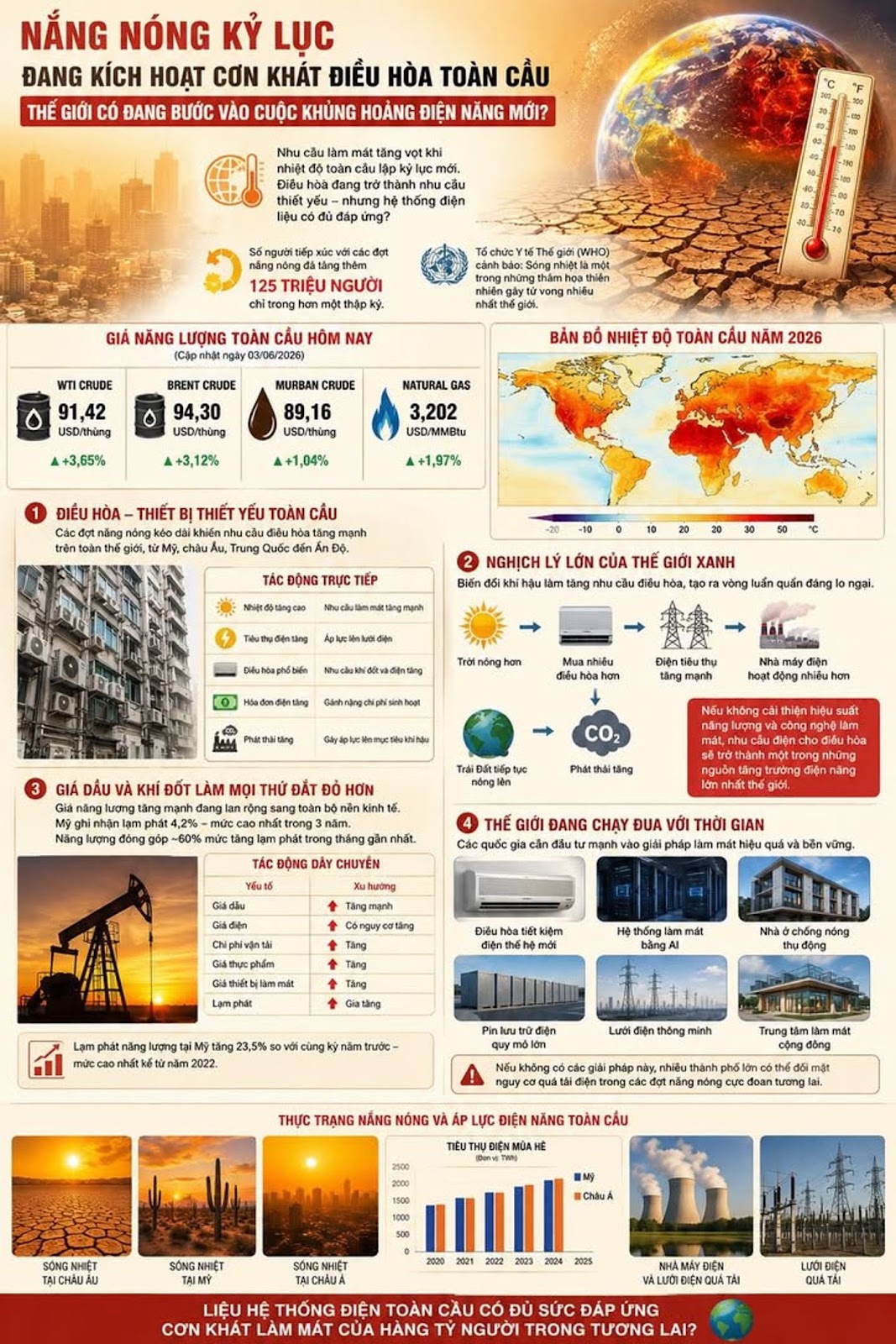
Record Heatwaves Fuel Global Air Conditioning Demand, Is the World Facing a New Energy Crisis?
As temperatures reach unprecedented levels worldwide, a silent crisis is emerging. Could air conditioning become as essential as clean water and mobile phones within just a few years, potentially causing unprecedented electricity shortages in many countries?
While WTI crude oil rises to $91.42 per barrel, Brent reaches $94.30 per barrel, and natural gas climbs to $3.202/MMBtu, the world faces an increasingly apparent silent crisis: the explosion in cooling demand as extreme heatwaves become more frequent and intense.
The Global Heat Epidemic
International research shows that the number of people exposed to extreme heat has increased by approximately 125 million in just over a decade. The World Health Organization now warns that heatwaves are among the deadliest natural disasters globally, causing more deaths than any other weather-related phenomenon.
This rising temperature trend is not merely a statistical concern—it represents a direct threat to human health, economic productivity, and energy security across the planet.
| Current Global Energy Prices | ||
|---|---|---|
| Energy Type | Current Price | Change |
| WTI Crude | $91.42/barrel | +3.65% |
| Brent Crude | $94.30/barrel | +3.12% |
| Murban Crude | $89.16/barrel | +1.04% |
| Natural Gas | $3.202/MMBtu | +1.97% |
Air Conditioning: From Luxury to Necessity
From America and Europe to China and India, prolonged heatwaves are driving a surge in air conditioning demand. Many regions report localized shortages due to sudden increases in purchasing power. No longer considered a luxury item, air conditioning has become a critical health protection device.
| Impact Phenomenon | Direct Effects |
|---|---|
| Rising Temperatures | Significant increase in cooling demand |
| Increased Electricity Consumption | Pressure on electrical grids |
| Widespread AC Adoption | Higher demand for gas and electricity |
| Rising Electricity Bills | Increased cost of living burden |
| Increased Emissions | Pressure on climate targets |
The Great Green Paradox
What's particularly concerning is that climate change itself is creating greater demand for air conditioning. This creates a concerning vicious cycle:
| Step in Cycle | Consequence |
|---|---|
| Hotter Weather | Increased demand for cooling |
| More AC Purchases | Higher electricity consumption |
| Increased Power Plant Operation | Higher emissions |
| Rising Emissions | Continued global warming |
Experts warn that without improvements in energy efficiency and cooling technology, electricity demand for air conditioning could become one of the largest sources of electricity growth worldwide for decades to come.
Rising Oil and Gas Prices Exacerbate the Crisis
Simultaneously, soaring energy prices are spreading throughout the global economy. The US recently recorded 4.2% inflation—the highest in three years—with energy accounting for approximately 60% of recent inflation increases.
| Ripple Effect Factor | Trend |
|---|---|
| Oil Prices | Strong increase |
| Electricity Prices | Risk of increase |
| Transportation Costs | Increase |
| Food Prices | Increase |
| Cooling Equipment Prices | Increase |
| Inflation | Growth |
Energy inflation in the US alone has surged by 23.5% compared to the same period last year—the highest level since 2022.
The Global Race Against Time
Countries are now investing not only in solar power, wind energy, and battery storage but also in more efficient cooling solutions. Technologies expected to make a difference include:
- Next-generation energy-efficient air conditioning systems
- AI-powered cooling systems
- Passive cooling buildings
- Large-scale energy storage solutions
- Smart electrical grids
- Community cooling centers
Without these solutions, many major cities could face the risk of electricity overload during future extreme heat events.
The Critical Question
The biggest question now is no longer whether oil prices will exceed $100 per barrel, but whether the global electricity system can meet the cooling demands of billions as Earth's temperatures continue to rise.
The convergence of climate change, energy market volatility, and technological challenges creates one of the most significant tests for global energy systems in the 21st century. The way we address this cooling crisis will determine not only our comfort but our collective ability to adapt to a changing climate while maintaining economic stability.