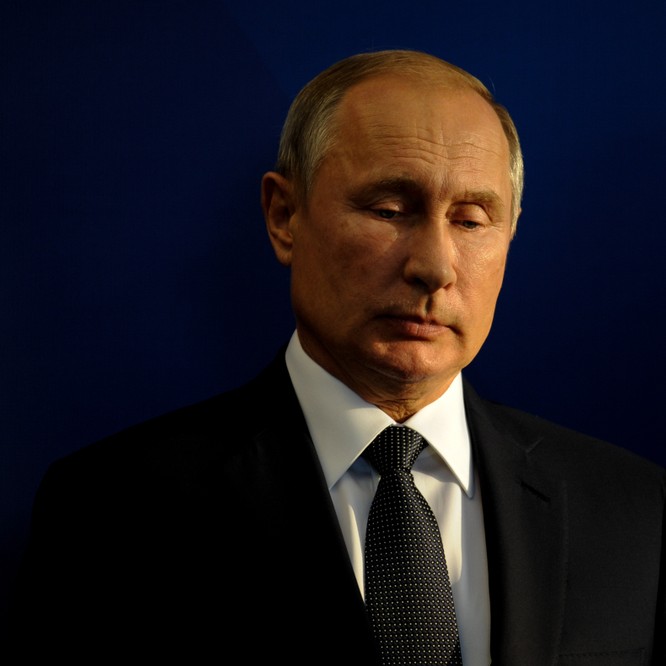
Russia's Energy Crisis Deepens as Putin Acknowledges Critical Fuel Shortages
In a rare admission of the growing challenges facing Russia's energy sector, President Vladimir Putin has publicly acknowledged the country's fuel shortages, a crisis that has become increasingly apparent to outside experts, regional officials, and ordinary citizens alike. During a recent meeting, Putin stated: "You all know that problems for drivers and businesses continue." He further pointed out that "unfortunately, there are still long lines at gas stations," confirming what many Russians have been experiencing firsthand.
Emergency Situation Amidst Ukrainian Attacks
Putin emphasized the need to minimize the impact of terrorist attacks on civilian targets and infrastructure, clearly referring to Ukrainian drone strikes on critical energy facilities deep within Russian territory. These attacks have targeted oil ports, refineries, and oil pipelines across the country.
The energy crisis has reached a critical point, with at least 17 regions implementing mandatory restrictions on gasoline and diesel sales. Dozens more areas are reporting shortages or limitations imposed by private fuel companies. The situation has created significant challenges for transportation, logistics, and essential services across affected regions.
Putin's Statements at Party Meeting
Recent remarks by Putin came during a meeting with senior officials of United Russia, his primary political tool nationwide. He made similar comments in an interview subsequently released by the Kremlin, though attempting to downplay the severity of the crisis.
In the interview, scheduled for broadcast on state television, Putin stated: "Regarding attacks on critical infrastructure in general, and energy infrastructure in particular, it's clear that these attacks create problems, that's obvious." He also mentioned: "Currently, we are seeing a certain shortage, but not a critical one."
Citizen Reactions
Videos circulating online show frustrated drivers queuing at gas stations, with frequent heated arguments breaking out between motorists. The visible frustration among ordinary citizens contrasts with the government's attempts to present the situation as manageable.
Agricultural Support Measures
Putin has called for measures to ensure fuel supply for the agricultural sector, while authorities are considering a ban on diesel exports in this typically energy-rich nation. He stated: "It is necessary to consider imposing a complete ban on fuel diesel exports."
The president affirmed that the country is currently using its gasoline reserves and committed that production in July will be higher than in June. Putin also mentioned that a fuel supply task force is working around the clock to address the crisis.
"We need to make every effort to ensure that all seasonal fuel supply schedules are maintained for agro-industrial enterprises, because the harvest depends on it," he emphasized, highlighting the potential impact on food production and security.
Ukrainian Attacks and International Response
Just before Putin's statements, a Ukrainian drone attack killed one person and caused a fire at a refinery in Russia's southern Krasnodar region, as reported by Governor Veniamin Kondratyev on Telegram.
Ukrainian President Volodymyr Zelenskyy described these attacks as part of "operations to weaken Russia's ability to wage war." He also noted: "The Slavyansk refinery in the Krasnodar region was attacked - about 300 km from the front line. We also reached a refinery in the Yaroslavl region, about 700 km from the border."
International Negotiation Prospects
On June 25, Zelenskyy announced he had approved a 40-day military operation by the security service to "influence the aggressor state to promote the end of the war," as U.S.-backed peace efforts appear to be facing difficulties.
In the interview, Putin expressed his expectation that a U.S. negotiation team would arrive in Moscow once Washington reaches an agreement with Iran regarding the Middle East conflict. "We are ready to continue negotiations and discuss all the details," he said, though there have been no indications thus far of any softening of his demands despite the difficulties Russian forces have faced since launching the full-scale invasion of Ukraine in February 2022.
| Aspect | Details |
|---|---|
| Date of Putin's acknowledgment | June 28 |
| Regions affected by restrictions | At least 17 regions |
| Recent drone attack locations | Krasnodar, Yaroslavl |
| Primary issues | Fuel shortages, long queues at gas stations |
| Potential response | Diesel export ban |
The energy crisis in Russia represents a significant challenge for the nation's war effort and domestic stability. As the conflict with Ukraine continues, the vulnerability of Russia's energy infrastructure has become increasingly apparent, with both military and economic consequences that could extend far beyond the immediate fuel shortages affecting Russian citizens today.