#Iran #China #DauMo #XuatKhauDauMo #DuongSat #Hormuz #NangLuong #KinhTeTheGioi #CongNgheDauKhi #DauKhi #TrungDong
If Iran really reduces its dependence on the Strait of Hormuz by rail, will this be a step that makes the US and sanctions lose their weight?
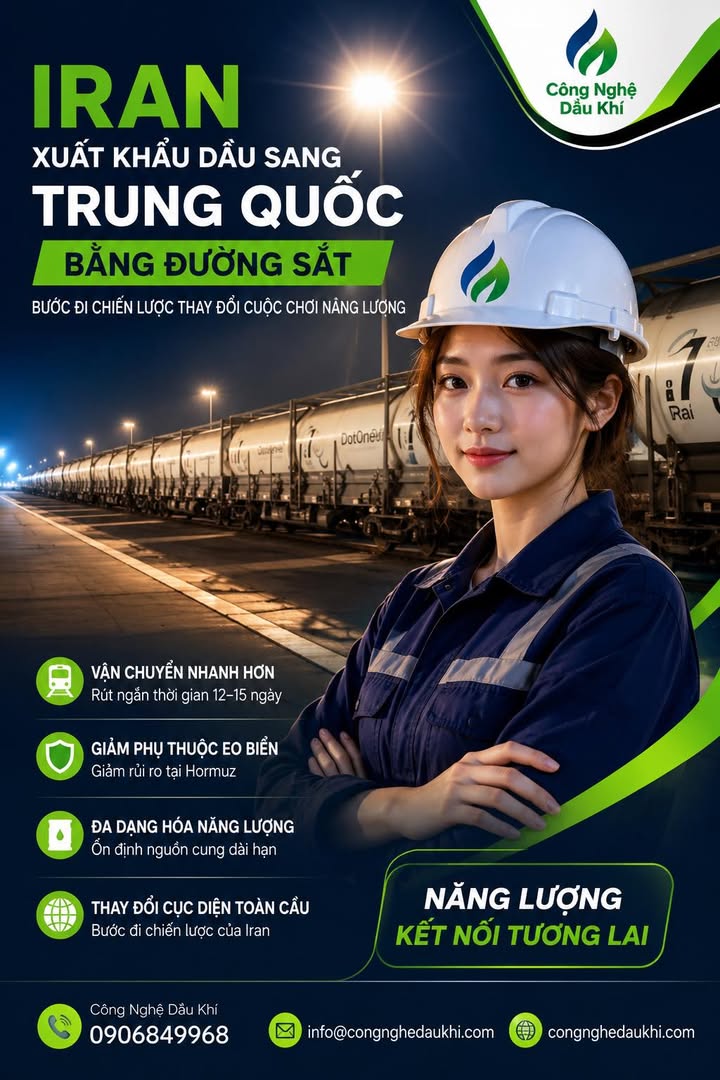
Information that Iran is promoting oil transportation to China by rail is creating a lot of debate in the international energy market. In the context of tensions in the Strait of Hormuz causing oil tanker traffic to decrease sharply, Tehran is looking for ways to maintain the flow of oil money through alternative transport routes.
What's going on?
Iran exports most of its crude oil to China. Previously, this activity mainly relied on a huge fleet of oil tankers and a complex shipping network. However, sanctions and the threat of blockade of maritime routes have led Iran to look for a railway corridor across Central Asia.
According to many analyzes, the Iran-China railway can shorten transportation time to about 12-15 days instead of 30-40 days by sea in some cases.
Compare oil transportation by ship and rail
Criteria for VLCC Railway Tankers
Volume per trip 1.9 - 2.2 million barrels 60,000 - 70,000 barrels
Shipping costs Lower Higher
Speed 30 - 40 days 12 - 15 days
Scalability Very Large Limited
Source compiled from international energy analysis.
The most shocking point
Although hereditarySocial media describes this as a "revolution", many experts believe that the railway is only a support and cannot replace oil trains.
A VLCC ship can carry more than 2 million barrels of oil in one trip.
Meanwhile, a standard oil train only holds about 60,000 to 70,000 barrels. To replace a VLCC train requires dozens of trains to operate continuously.
China's role
China is still Iran's largest oil customer. Many reports show that more than 80% of Iran's oil exports eventually find their way to Chinese refineries through various mechanisms.
The table affects the parties
Stakeholders Benefits
Iran Reduces dependence on sea routes
China Diversifies oil supply
America It is more difficult to control oil flows
Oil market Reduced concerns about supply disruption
Could this railway be a game changer?
The current answer is not completely.
But it shows that Iran is building a backup network of railways, roads and routes across the Caspian Sea to maintain exports even when shipping is difficult.
In the modern energy world, sometimes what changes the game is not super oil tankers worth trillions of dong but trains that run across continents at night.
Brent oil prices once fluctuated around the threshold
┏━━━━━━━━━━━━━━┓
┃ 2,300,000 VND ┃
┃ per converted carton ┃
┗━━━━━━━━━━━━━━┛
Depending on geopolitical developments and exchange rates from time to time.
The biggest question now is no longer whether Iran has itCan you sell oil or not?
But how many countries will the world see starting to build energy transport routes beyond the control of traditional maritime routes?
#TinNongNangLuong #DauMoIran #IranChinaRailway #XuatKhauDauMo #KinhTeToanCau #ThiTruongDauMo #NangLuongTheGioi #China #Hormuz #CongNgheDauKhi #DiaChinhTri #NangLuong2026