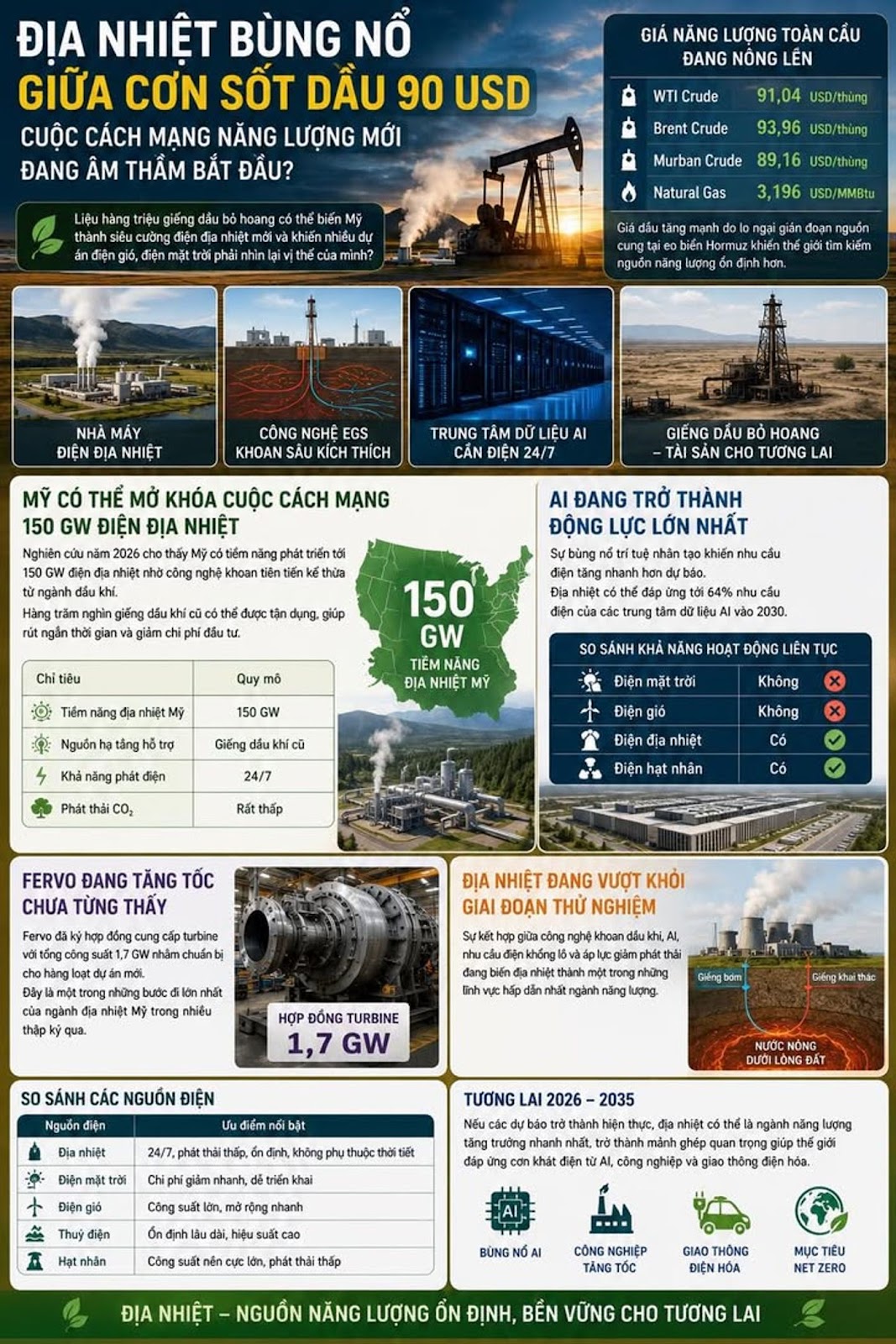
Geothermal Energy Surges Amidst $90 Oil, A New Energy Revolution Begins?
In a global energy market witnessing West Texas Intermediate (WTI) crude oil prices reaching $91.04 per barrel and Brent crude climbing to $93.96 per barrel, a less noticed but potentially transformative trend is emerging: the rapid expansion of geothermal energy. As nations and businesses seek more stable energy alternatives amid concerns about supply disruptions in strategic regions like the Strait of Hormuz, geothermal power is positioning itself as a cornerstone of the future energy landscape.
Unlike solar power, which is weather-dependent, or wind power, which relies on wind speed, geothermal energy offers the unique advantage of continuous 24/7 power generation with exceptionally high capacity factors. This reliability has increasingly attracted major technology corporations and artificial intelligence (AI) data centers seeking dependable energy sources to power their operations.
The Global Energy Price Surge
Current energy prices reflect heightened concerns about global supply security, particularly with approximately 20% of global oil passing through the Strait of Hormuz, a chokepoint that has seen repeated tensions in recent years. The following table illustrates the current energy price landscape:
| Energy Type | Current Price |
|---|---|
| WTI Crude | $91.04/barrel |
| Brent Crude | $93.96/barrel |
| Murban Crude | $89.16/barrel |
| Natural Gas | $3.196/MMBtu |
This price environment is driving renewed interest in alternative energy sources that can provide both price stability and environmental benefits. Geothermal energy, with its low operational costs and minimal fuel price volatility, is emerging as an increasingly attractive option.
Unlocking America's 150 GW Geothermal Potential
One of the most significant developments in the energy sector comes from research indicating that the United States possesses the potential to develop up to 150 GW of geothermal electricity capacity by 2030. This potential is largely attributable to advanced drilling technologies directly inherited from the oil and gas industry.
What makes this development particularly remarkable is the possibility of repurposing hundreds of thousands of abandoned oil and gas wells for geothermal energy production, rather than requiring entirely new infrastructure development. This approach could dramatically reduce both costs and development time for geothermal projects.
| Metric | Specification |
|---|---|
| US Geothermal Potential | 150 GW |
| Supporting Infrastructure | Repurposed Oil & Gas Wells |
| Power Generation Capability | 24/7 Continuous Operation |
| CO2 Emissions | Very Low |
AI as the Primary Growth Driver
The explosive growth of artificial intelligence is creating unprecedented electricity demand that is outpacing earlier forecasts. Research indicates that geothermal energy could potentially meet up to 64% of electricity needs for AI data centers by 2030, making it an increasingly critical component of the AI infrastructure ecosystem.
The continuous operation capability of geothermal power plants addresses a fundamental limitation of intermittent renewable sources like solar and wind, which cannot guarantee the consistent power supply required for energy-intensive AI operations. The following comparison highlights this advantage:
| Power Source | Continuous Operation |
|---|---|
| Solar Power | No |
| Wind Power | No |
| Geothermal Power | Yes |
| Nuclear Power | Yes |
This operational reliability makes geothermal power the ideal choice for large-scale AI server farms and data centers, where even brief power interruptions can result in significant financial losses and computational setbacks.
Fervo's Unprecedented Acceleration
The geothermal sector is witnessing unprecedented momentum with companies like Fervo rapidly expanding their operations. Fervo has recently signed contracts for turbine installations with a total capacity of 1.7 GW, preparing for a series of new geothermal projects. This represents one of the most significant developments in the US geothermal industry in decades.
The company's success demonstrates that geothermal energy is transitioning from a niche technology to a mainstream energy source, supported by a combination of technological advancements, increasing electricity demand, and mounting pressure to reduce carbon emissions.
Geothermal Energy Moving Beyond Experimental Stage
For many years, geothermal energy was largely considered a niche technology with limited applicability. However, the convergence of several factors is transforming its status:
- Advanced drilling technologies originally developed for oil and gas exploration
- The exponential growth of AI and data center electricity demands
- Intensifying global pressure to reduce carbon emissions
- Economic incentives from carbon pricing mechanisms
The following table compares geothermal energy with other renewable and conventional sources, highlighting its unique advantages:
| Energy Source | Key Advantages |
|---|---|
| Geothermal | 24/7 operation, low emissions |
| Solar Power | Rapidly decreasing costs |
| Wind Power | Large power generation capacity |
| Hydropower | Long-term stability |
| Nuclear | Extremely large baseload capacity |
Future Outlook for Geothermal Energy
If current projections materialize, geothermal energy could become the fastest-growing segment in the energy sector between 2026 and 2035. It is poised to become a critical component in meeting the world's escalating electricity demands from AI, industrial processes, and the electrification of transportation.
The integration of geothermal energy with other renewable sources could create a more resilient and balanced energy grid, capable of meeting both baseload and peak demand requirements. As technology continues to advance and costs decrease, geothermal energy may become increasingly competitive with traditional energy sources in more regions worldwide.
The repurposing of existing oil and gas infrastructure for geothermal development represents a particularly promising pathway for accelerating the energy transition while maximizing the value of existing assets. This approach could potentially transform regions heavily dependent on fossil fuel extraction into hubs for clean energy production.
Conclusion: Geothermal's Place in the Energy Future
As the global energy landscape continues to evolve, geothermal energy is emerging as a critical component of a diversified, sustainable energy portfolio. Its unique ability to provide reliable, carbon-free baseload power addresses fundamental limitations of other renewable sources while meeting the increasingly demanding requirements of modern digital infrastructure.
With oil prices remaining elevated and concerns about energy security persisting, geothermal energy's potential to stabilize electricity costs and enhance energy independence makes it an increasingly attractive investment for both public and private sectors. The ongoing technological advancements, particularly in enhanced geothermal systems (EGS), promise to expand the geographic reach and economic viability of geothermal power even further.
As we move toward a more electrified and decarbonized future, geothermal energy may well emerge as the "new star" of the global energy sector, complementing rather than replacing other renewable sources to create a more resilient and sustainable energy ecosystem.