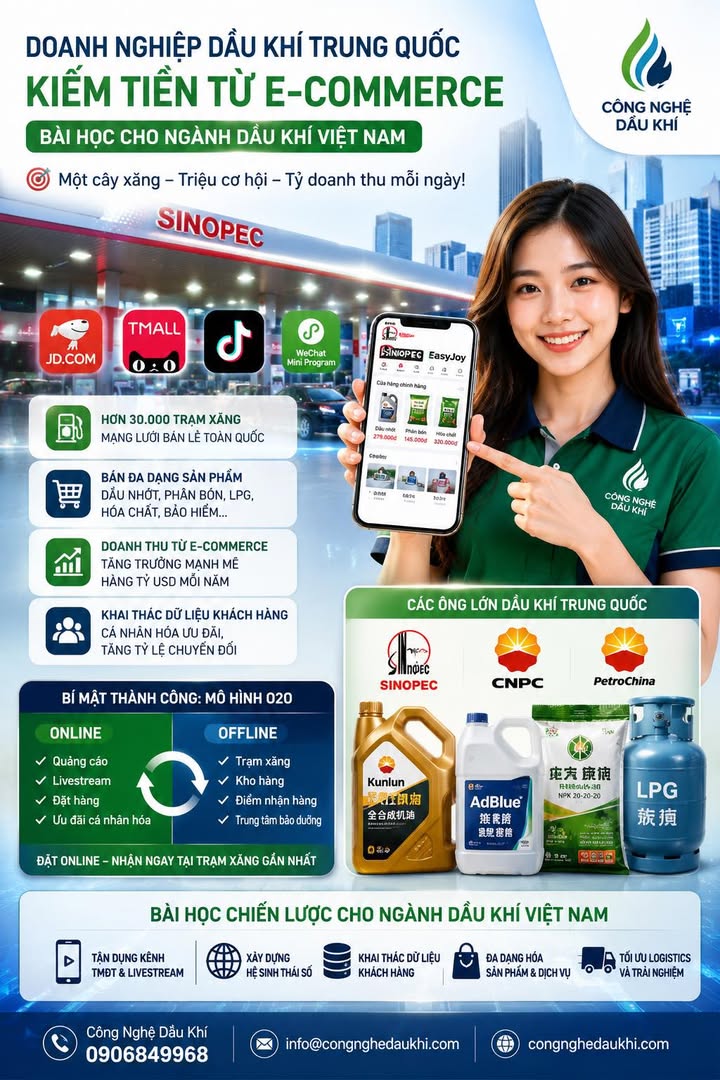
#OilGas #China #Sinopec #CNPC #PetroChina #JDcom #Tmall #TikTokShop #Ecommerce #LiveCommerce #Digital Transformation #OilGas Technology
If a gas station not only sells gasoline but also sells lubricants, fertilizers, insurance and closes billions of dong every day on TikTok Shop, is the Vietnamese oil and gas industry missing out on a huge revenue mine?
While many businesses still view e-commerce as a side channel, Chinese oil and gas corporations have turned e-commerce into a strategic growth machine. They not only exploit oil but also exploit customer data, consumer behavior and the power of algorithms.
Sinopec turns more than 30,000 gas stations into a digital retail network
Sinopec is the world's leading refining and petrochemical corporation. In addition to fuel, this business builds the EasyJoy ecosystem, digital applications and sales on JD.com and Alibaba Group through the Tmall platform.
Products sold online include:
• Lubricants for cars and motorbikes
• Fuel additives
• Consumer chemicals
• Car insurance
• Fuel vouchers
• Vehicle care equipment
EPEC is considered the Alibaba of industry
Sinopec builds EPEC, a B2B platform specializing in trading chemicals, materials and energy equipment. Cumulative transaction value has reached tens of billions of USD, serving customers in more than 100 countries.
Main product groups
• Chemicals
• Industrial equipment
• Plastics and polymers
• Petroleum supplies
• Logistics services
CNPC and PetroChina promote online lubricants
CNPC and PetroChina developedStrong Kunlun Lubricants brand.
Sales channel
• JD.com
• Tmall
• WeChat Mini Program
• Livestream on Douyin
Outstanding product
• Engine oil
• Industrial oil
• AdBlue solution
• Vehicle maintenance accessories
Compare the digital strategies of Chinese giants
Business Strengths Monetization model
Sinopec 30,000 gas stations, EasyJoy O2O and omnichannel retail
CNPC Kunlun Lubricants Livestream and marketplace
PetroChina Energy ecosystem Cross-selling services
Alibaba Trading platform Collects transaction fees
JD.com Super fast logistics Distribution and fulfillment
The secret to success lies in the O2O model
Online
• Advertising
• Livestream
• Place an order
• Personalize offers
Offline
• Gas station
• Warehouse
• Product pick-up point
• Maintenance center
Customers can order on the phone and receive the goods right at the nearest gas station.
Technical livestream creates extremely strong trust
Lubricant brands in China often organize livestreams with engineers and experts
• Compare product quality
• Instructions for use
• Technical answers
• Issue limited-time vouchers
This helps increase closing rates and significantly reduce advertising costs.
Petroleum products sell extremely well on e-commerce
Product group Strong sales channels
Lubricants JD.com, Tmall, Douyin
Alibaba fertilizer, Pinduoduo
Residential LPG App and Mini Program
EPEC and Alibaba Chemicals
Car Insurance App and WeChat
Can a bottle of lubricant become a national brand promotion tool?
The answer is yes. When consumers buy directly from brands hWith a big brand, businesses not only sell products but also build trust and own long-term customer data.
Strategic lessons for Vietnam
Petrovietnam, PVOIL, PV GAS, PVFCCo and PVI can completely deploy similar models to sell
• Lubricants
• LPG and gas equipment
• Fertilizer
• Insurance
• Consumer chemicals
Final view
China shows that oil and gas corporations not only make money from oil wells, but also make money from every livestream view, every online order and every customer data.
If you make good use of TikTok Shop, Shopee, e-commerce websites and AI, Vietnam's oil and gas industry can open a new revenue mine worth trillions of VND each year.
And the biggest question is whether we will go ahead to dominate the market or wait until technology competitors take away the last customers?
#Sinopec #CNPC #PetroChina #JDcom #Tmall #Douyin #TikTokShop #Shopee #LiveCommerce #Lubricant Oil #Fertilizer #Insurance #OilGas Technology